















Login to Internet banking
A brand-new experience - smarter, faster, and secured


Introducing the First-in-industry IDFC FIRST Bank's Super Account
Request a Callback
You gain a dedicated partner committed to helping you reach your full potential and achieve new heights
Know More
BRAVO (Auto Sweep)
Convert the idle funds in your current account into a fixed deposit with the BRAVO feature.
Know More
Zero Forex Markup Current Account
Maximise your savings and boost profitability with our Zero Forex Markup current accounts
Know More
Make more than one online payment in just a few clicks with IDFC FIRST Bank Bulk Payments
Know More





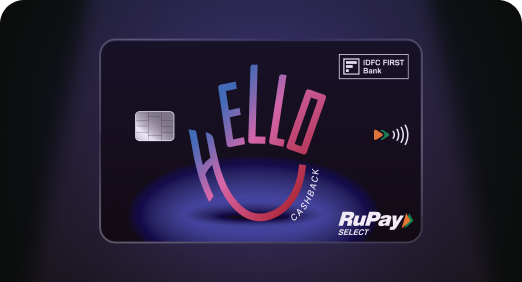
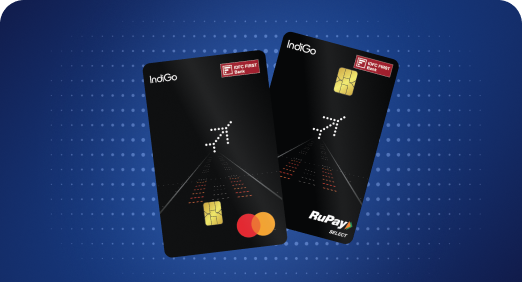

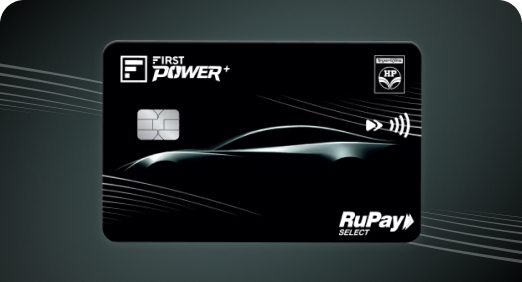
A Card that Powers your Savings & Lifestyle
IDFC FIRST Bank HPCL Credit Card





Most Searched

Earn up to 6.50% interest on your Savings Account
Open Account Now
Download our app
Get instant help for all your queries in one place
Unlock features, exclusively available
only on the IDFC FIRST Bank app
Trusted by 1.2+ million Indians.


4.8

4.8

Tools & Calculators
Privilege Program




Unlock features, exclusively available
only on the IDFC FIRST Bank app
Personal Loan
 RBI Monetary Policy Committee (MPC) decisions influence personal loan interest rates indirectly through changes in the repo rate.
A repo rate cut may lower borrowing costs and improve loan affordability, while a repo rate hike can increase lending rates.
The impact on personal loan EMIs depends on whether the loan has a fixed or floating interest rate.
Actual personal loan cost also depends on factors such as credit score, income, repayment history, and lender policies.
In the June 2026 MPC meeting, the RBI kept the repo rate unchanged at 5.25% and maintained its neutral policy stance.
RBI Monetary Policy Committee (MPC) decisions influence personal loan interest rates indirectly through changes in the repo rate.
A repo rate cut may lower borrowing costs and improve loan affordability, while a repo rate hike can increase lending rates.
The impact on personal loan EMIs depends on whether the loan has a fixed or floating interest rate.
Actual personal loan cost also depends on factors such as credit score, income, repayment history, and lender policies.
In the June 2026 MPC meeting, the RBI kept the repo rate unchanged at 5.25% and maintained its neutral policy stance.
Every time the RBI announces its monetary policy, borrowers, investors, and lenders closely watch the outcome. That's because the Monetary Policy Committee (MPC) decides the repo rate, which acts as a benchmark for borrowing costs across the economy.
The MPC evaluates inflation, economic growth, liquidity conditions, and global developments before deciding whether to increase, decrease, or maintain the repo rate.
RBI monetary policy committee of India’s decisions affect personal loans indirectly through changes in the repo rate.
When the RBI cuts the repo rate, borrowing costs for banks may reduce, which can lead to lower lending rates for borrowers over time.
When the RBI raises the repo rate, lenders may increase loan rates to offset higher funding costs.
However, the final interest rate offered on a personal loan also depends on your credit profile and the lender's policies.
Most borrowers are not concerned about the repo rate itself. They want to know:
Will my EMI reduce?
Will personal loan interest rates fall?
Should I apply now or wait for the next rate reduction?
A repo rate cut can allow lenders to offer more competitive interest rates to borrowers. This may improve loan affordability and reduce your overall borrowing cost. Conversely, a repo rate hike can increase funding costs and may result in higher lending rates for new borrowers.
Let's assume you take a personal loan of ₹5 lakh for 3 years.
While the monthly EMI difference may appear small, even a modest reduction in lending rates can result in meaningful savings over the loan tenure.
| Particulars | Initial rate | If rate gets cut by 0.5% |
| Loan Amount | ₹5 lakh | ₹5 lakh |
| Interest Rate | 12.0% p.a. | 11.5% p.a. |
| EMI | ₹16,607 | ₹16,488 |
| Monthly Saving | - | ₹119 |
| Total Saving Over 3 Years | - | ₹4,284 |
*The calculation above is shown for illustration purposes only.
No. Unlike home loans, personal loan rate transmission is often slower and less predictable. This is because personal loan pricing depends heavily on:
Credit score
Income level
Existing EMIs
Repayment history
Lender risk assessment
Competitive market conditions
As a result, a repo rate cut does not automatically translate into an equivalent reduction in personal loan interest rates.
The impact depends on the type of loan.
Interest rates may change when lenders revise their benchmark rates following an RBI policy decision.
Most personal loans are offered at fixed interest rates. Once the loan is sanctioned, your EMI and interest rate generally remain unchanged throughout the tenure, regardless of future MPC decisions.
The RBI Monetary Policy Committee (MPC) unanimously decided to keep the repo rate unchanged at 5.25% in its June 2026 policy meeting. The central bank also retained its neutral stance, indicating that future rate decisions will depend on evolving inflation and growth conditions.
Since the repo rate remains unchanged, personal loan interest rates are unlikely to see any immediate impact. Borrowers can expect lending rates and EMIs to broadly remain stable in the near term. However, lenders may continue to review their loan pricing based on market conditions, funding costs, and individual borrower profiles.
If you have an immediate requirement, such as a pending home renovation, education expense, travel plan, debt consolidation, or a laptop purchase, it may not make sense to postpone your decision in anticipation of a rate cut.
A small movement in interest rates often has less impact on your borrowing experience. What matters more is:
Your eligibility
Your credit score
Lender policies
Other charges such as processing fee and foreclosure charges
The RBI MPC does not directly determine personal loan interest rates, but its repo rate decisions influence the overall lending environment. A repo rate cut can improve your loan affordability, while a repo rate hike may make the loans costlier.
For most borrowers, the best approach is to focus on securing a competitive interest rate, affordable EMI, and flexible loan terms rather than trying to predict every RBI policy move.
FIRSTmoney Personal Loan by IDFC FIRST Bank offers loan amounts of up to ₹15 lakh, interest rates starting from 9.99% p.a., instant disbursal in 10 minutes, and zero foreclosure charges, helping borrowers manage their financing needs with greater flexibility.
Important resources to make a smart borrowing decision:
No. The RBI MPC decides the repo rate, while lenders determine personal loan interest rates based on funding costs, borrower risk, and internal lending policies.
Not necessarily. A repo rate cut can encourage lower lending rates, but lenders are not required to reduce personal loan rates immediately or by the same percentage.
If you already have a fixed-rate personal loan, your EMI will usually remain unchanged. For floating-rate loans, any change depends on how and when the lender passes on the benefit of lower rates.
The right time depends on your financial requirement, eligibility, and repayment capacity. Borrowers should focus on affordability, loan features, and interest rates rather than trying to time every MPC decision.
The contents of this article/infographic/picture/video are meant solely for information purposes. The contents are generic in nature and for informational purposes only. It is not a substitute for specific advice in your own circumstances. The information is subject to updation, completion, revision, verification and amendment and the same may change materially. The information is not intended for distribution or use by any person in any jurisdiction where such distribution or use would be contrary to law or regulation or would subject IDFC FIRST Bank or its affiliates to any licensing or registration requirements. IDFC FIRST Bank shall not be responsible for any direct/indirect loss or liability incurred by the reader for taking any financial decisions based on the contents and information mentioned. Please consult your financial advisor before making any financial decision.
The features, benefits and offers mentioned in the article are applicable as on the day of publication of this blog and is subject to change without notice. The contents herein are also subject to other product specific terms and conditions and any third party terms and conditions, as applicable. Please refer our website www.idfcfirst.bank.in for latest updates.