









Login to Internet banking
A brand-new experience - smarter, faster, and secured



You gain a dedicated partner committed to helping you reach your full potential and achieve new heights
Know More

BRAVO (Auto Sweep)
Convert the idle funds in your current account into a fixed deposit with the BRAVO feature.
Know More
Zero Forex Markup Current Account
Maximise your savings and boost profitability with our Zero Forex Markup current accounts
Know More





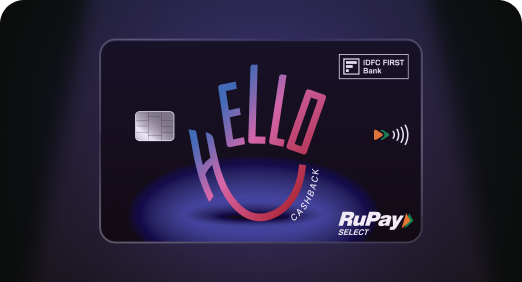



A Card that Powers your Savings & Lifestyle
IDFC FIRST Bank HPCL Credit Card









Most Searched
Earn up to 7% interest on your Savings Account
Open Account Now
Download our app
Get instant help for all your queries in one place
Unlock features, exclusively available
only on the IDFC FIRST Bank app
Trusted by 1.2+ million Indians.


4.8

4.8

Tools & Calculators
Privilege Program



Tools & Calculators

Unlock features, exclusively available
only on the IDFC FIRST Bank app
Savings Account
 Teaching kids about money early helps them develop saving and spending habits
Encourage children to set financial goals and track their progress to build responsibility
Introduce basic banking concepts and allow them to manage small amounts of money
Use practical activities to make learning about money engaging and understandable
Teaching kids about money early helps them develop saving and spending habits
Encourage children to set financial goals and track their progress to build responsibility
Introduce basic banking concepts and allow them to manage small amounts of money
Use practical activities to make learning about money engaging and understandable
Teaching your kids the value of money is perhaps the most important job you’ll do as a parent. Saving money is a hard lesson to learn for anybody; however, when your kids learn it early in their lives, they’re more likely to make smart financial decisions when they’re older which will save them from costly money decisions.
Good money management for young adults starts with small lessons taught at home during childhood.
Wondering where to start? From offering them their own savings account aka piggy bank to letting them earn money, here are four simple ways that will help you teach your kids the value of money:
Children absorb financial habits long before they earn their first salary. Starting early gives your kids time to understand concepts like saving, spending and patience without the pressure of real financial stress. Kids who practise these lessons at home tend to make more thoughtful choices later, whether that means avoiding unnecessary debt or planning ahead for a big purchase.
Early exposure also builds confidence around money, so your child doesn't feel overwhelmed when they eventually manage their own income. Teaching them money management tips for young adults now means they'll make fewer money mistakes as they grow older.
A simple way to explain wants versus needs is the three-jar method used by many financial educators. Label three jars 'save', 'spend' and 'share', and let your child sort their pocket money into each one. This turns an abstract idea into something they can see and touch, so they start recognising on their own that a need, like school supplies, belongs in one category and a want, like a new toy, belongs in another.
Approach |
How it helps |
Three-jar method |
Helps children visually separate money into “save,” “spend,” and “share” categories. |
Use real examples |
Show the difference between a need, like school supplies, and a want, like a new toy. |
Practice during grocery trips |
Ask your child to identify which items are needs and which are wants. |
Repeat the exercise regularly |
Reinforcing the idea through everyday situations helps the lesson stick better than a one-time conversation. |
A child will always ask for chocolates, chips, toys because that’s what they want. They don’t understand the needs - food, shelter, clothing, school fees, etc. Help them understand the difference between the two and how budgeting helps them achieve both in due time.
Parents must teach their kids the value of saving right from a young age. Gift them a piggy bank which is the child’s equivalent of a savings account. If your kids want a toy worth Rs. 200, show them how each time they put money into their piggy bank, they get closer to the toy’s price. Say your kid earns Rs 10 after he/she helps you do the dishes, once he/she puts the amount in their bank, you add Rs 5; this teaches your kid the value of interest. Step by step, your kid will earn Rs. 200.
Involving your kids in family budgeting works best when you keep the process visual, simple, and participative. A shared whiteboard or printed chart can help them understand where the family’s money goes each month.
List common monthly expenses such as groceries, school fees, and entertainment.
Ask your child to help tick off items as bills are paid, making budgeting feel like a shared family task rather than an adult-only conversation.
Give them a small, real responsibility, such as tracking the family’s grocery spending for a week against a set amount.
Use this hands-on activity to help them understand planning, spending limits, and trade-offs.
At the start of each month, when you and your partner sit down to prepare the budget for the month’s household expenses, include your kid into it. When you’re listing all the items and the quantities you want or whether to pay bills via debit or credit card, ask your kid about his/her opinion. If they say, “Let’s buy 20 chocolates”, teach them it’s better to buy two chocolates each month. This way they not only save money but can buy different brands each month as per their liking.
Many banks in India now allow children aged 10 and above to use a debit card and UPI on their savings account, with spending limits set by the parent or guardian. This makes it easier to introduce digital payments gradually, starting with small, supervised transactions like paying for stationary or topping up a mobile recharge.
Walking your child through each digital payment step by step, from scanning a QR code to checking the transaction confirmation, helps them understand where the money is going. This awareness matters more as cash use declines and most spending moves online.
When your kid grows up, money will run online more than 99 per cent. Children need to understand the basics of digital money from a young age. Open a savings account for them. You can try the Minor’s Savings Account at IDFC FIRST Bank. Here, when you deposit money into that account, show them how you do it. Comparing credit cards online ? Keep them next to you and ask for their opinion, the more they’re exposed to digital money and finance, the quicker they’ll learn.
Understanding digital transactions early gives children a head start on money management for young adults when they open their own bank accounts.
Instead of giving your kids pocket money, let them earn it. Tell them you’ll pay Rs 10 each time they help you with a chore. It could be doing the dishes, helping you fold the clothes and keeping them in the cupboard or cleaning the house. This way they’ll understand the effort that goes behind earning each rupee.
Earning money through simple chores is one of the most effective money management tips for young adults to carry forward into adulthood.
The more you educate and encourage your kids to understand and learn about finance and budgeting, the sooner they will be able to handle their own money like a pro!
Use the three-jar method by helping children divide money into “save,” “spend” and “share” and identify everyday needs and wants.
Parents can use a savings account to teach saving and gradually introduce supervised digital payments and transactions.
The features, benefits and offers mentioned in the article are applicable as on the day of publication of this blog and is subject to change without notice. The contents herein are also subject to other product specific terms and conditions and any third party terms and conditions, as applicable. Please refer our website www.idfcfirst.bank.in for latest updates.