







Login to Internet banking
A brand-new experience - smarter, faster, and secured



BRAVO (Auto Sweep)
Convert the idle funds in your current account into a fixed deposit with the BRAVO feature.
Know More

Zero Forex Markup Current Account
Maximise your savings and boost profitability with our Zero Forex Markup current accounts
Know More
BRAVO (Auto Sweep)
Convert the idle funds in your current account into a fixed deposit with the BRAVO feature.
Know More
You gain a dedicated partner committed to helping you reach your full potential and achieve new heights
Know More




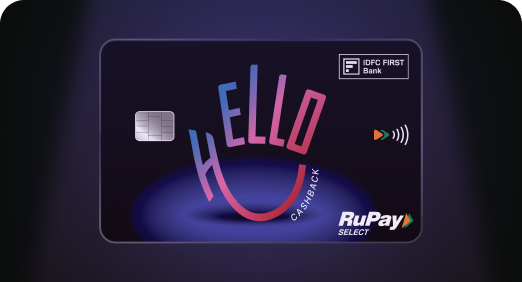

Enjoy Zero Forex on all IDFC FIRST Bank Credit Cards
Save more on all international spends
Know More
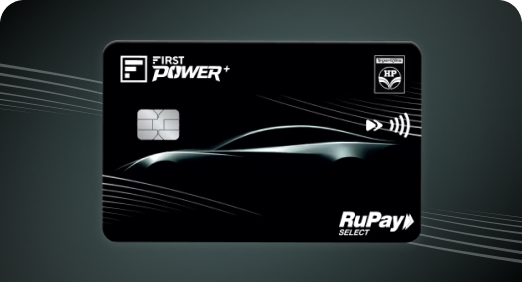
A Card that Powers your Savings & Lifestyle
IDFC FIRST Bank HPCL Credit Card









Most Searched
Earn up to 7% interest on your Savings Account
Open Account Now
Download our app
Get instant help for all your queries in one place
Unlock features, exclusively available
only on the IDFC FIRST Bank app
Trusted by 1.2+ million Indians.


4.8

4.8

Tools & Calculators
Privilege Program



Tools & Calculators

Unlock features, exclusively available
only on the IDFC FIRST Bank app
Credit Card
 A forex card suits prepaid budgeting and rate locking, while a zero forex credit card suits flexibility, rewards and travel benefits.
Zero forex markup in credit cards now removes the cost gap that once favoured forex cards.
Withdrawals, DCC and loading costs apply to both, so compare total cost before choosing either.
Should you preload a forex card or use a credit card abroad? The answer has changed with zero forex credit cards. A forex card holds prepaid foreign currency, while a credit card lets you pay later using a credit limit. This forex card vs credit card guide helps frequent travellers compare complete value, including fees, rewards, flexibility and travel benefits and pick a card best suited to their lifestyle.
A forex card is a prepaid card that you load with foreign currency before you travel. You can spend only the amount you've loaded onto the card. Depending on the card, you may also have to pay fees for loading money, reloading funds, withdrawing cash from ATMs or converting between currencies.
A credit card lets you make international payments using your available credit limit, without preloading money. The transaction is converted to INR when it's billed to your account. Traditional credit cards may charge a forex markup fee, while a zero forex credit card does not charge this fee on eligible international transactions.
Many travellers now prefer zero forex credit cards because they can be used for both international and everyday spending, while also earning rewards and cashback. And obviously eliminating the need for a separate travel card.
Factor |
Forex card |
Zero forex credit card |
How it is funded |
Prepaid |
Credit limit |
Exchange-rate timing |
Generally locked at loading |
Network rate at transaction |
Forex markup |
None, but loading rates apply |
None |
Loading and reloading |
Required, fees may apply |
Not required |
Rewards |
Generally limited or none |
As per card terms |
Credit period |
None |
As per card terms |
Lounge and travel benefits |
Limited |
On select cards |
Spending control |
Loaded balance |
Credit limit |
Cross-currency use |
Charges may apply |
Handled by network |
Unused balance |
Needs reconversion |
None to convert |
ATM withdrawal costs |
ATM and issuer fees |
Cash advance fee and interest |
Best suited for |
Fixed budgets |
Frequent travel and rewards |
The answer depends on the card you're comparing.
If you're using a regular credit card that charges a forex markup fee, a forex card may work out cheaper. However, a zero forex credit card removes that cost altogether, making the comparison much closer.
For example, on an international spend of ₹1,00,000, a credit card with a 3.5% forex markup would add ₹3,500 in charges. GST at 18% on that markup adds another ₹630, taking the total cost to ₹4,130. With a zero forex credit card, this cost does not apply.
A forex card may still have other costs to consider, such as:
Card issuance fees
Currency loading or reloading charges
Cross-currency conversion charges
ATM withdrawal fees
Balance encashment charges
On the other hand, a zero-forex credit card may have charges such as:
Cash withdrawal fees and interest on cash advances
Late payment charges
Interest charges if the outstanding balance is not paid in full
Annual or joining fees (on cards that are not lifetime free)
That's why the cheapest option isn't always the one with the lowest exchange rate. Before you choose, compare the total cost of using the card, including forex charges, fees and convenience. For many travellers, a zero forex credit card can be a simpler alternative since it can be used both abroad and for everyday spending back home.
Neither option is ideal for regular cash withdrawals, as both can come with additional charges.
With a forex card, you may have to pay ATM withdrawal fees, ATM operator charges or fees for withdrawing cash in a currency different from the one loaded on the card.
With a credit card, cash withdrawals are usually treated as a cash advance. This can attract a cash advance fee, interest charges from the date of withdrawal, taxes and any fees charged by the ATM operator.
As a result, credit cards are generally best used for purchases, while cash withdrawals should be limited to situations where cash is genuinely needed. When travelling abroad, many people prefer to carry a small amount of local currency for emergencies and use their card for most transactions.
Dynamic Currency Conversion (DCC) happens when a merchant or ATM offers to charge you in INR, using its own rate and possible markup. It affects both card types, and paying in INR on a forex card can trigger unnecessary conversion.
Key rule: Always choose to pay in local currency of the country you are travelling in, deny any transaction which is already converted to INR for convenience and always ask your merchant to restart the payment procedure
A forex card suits travellers who want prepaid budgeting and rate certainty, such as:
Students managing a fixed overseas budget
Travellers who want to lock an exchange rate
Long-stay travellers with predictable expenses
Users who prefer no extra credit
A zero forex credit card suits travellers who want flexibility, such as:
Frequent and multi-country travellers
Customers who want rewards and lounge access
Freelancers paying for global tools and subscriptions
People who can pay credit card bills in full and on time
With zero forex markup available across the IDFC FIRST Bank Credit Card portfolio, you can focus on choosing a card based on the benefits that matter most to you.
Looking for stronger rewards on international spending? Cards such as FIRST Wealth, FIRST Millennia and Mayura offer accelerated rewards that can help you get more value from your overseas spends.
Airport lounge access high on your list? FIRST Wealth, FIRST Ashva, Mayura and Diamond Reserve offer lounge access benefits that can make your time at the airport more comfortable.
Want premium travel and lifestyle privileges? FIRST Ashva, Mayura and Diamond Reserve are designed for customers who value elevated travel experiences and premium benefits.
Need a card that's rewarding even when you're back home? FIRST SWYP, FIRST Millennia and FIRST Hello Cashback continue to offer value across shopping, dining, entertainment and other everyday spends.
Looking for simpler eligibility? FIRST WOW! offers an FD-backed way to access a credit card and enjoy international spending benefits without traditional income-based eligibility requirements.
Want to keep fees low? Lifetime-free options such as FIRST WOW! and FIRST Wealth can be worth considering if you'd like to maximise value while keeping card costs down.
The best travel card is not necessarily the most premium one. It's the one that fits the way you travel, spend and manage your money throughout the year. Even when using a zero forex markup card, remember to pay in the local currency and decline DCC whenever you're given the option.
A forex card can be useful if you prefer to load a fixed amount before you travel. However, for many travellers, a zero forex credit card offers greater flexibility, rewards and travel benefits without the need to manage a separate card.
Since zero forex markup is available across IDFC FIRST Bank Credit Cards, you can focus on choosing a card based on the benefits that matter most to you, from rewards and lounge access to cashback and lifestyle privileges. Explore the IDFC FIRST Bank Credit Card portfolio to find the right fit for your next trip.
It depends on your travel style. A forex card suits fixed budgets and rate certainty, while a zero forex credit card suits frequent travellers who want rewards, lounge access and flexibility without preloading money. Compare fees and benefits first.
A forex card can be cheaper than a regular credit card charging a 2% to 3.5% markup plus GST. A zero forex credit card removes that markup on eligible transactions. You still need to check forex card loading and conversion costs.
A forex card is prepaid and loaded with foreign currency, usually at a locked exchange rate. A zero forex credit card uses your credit limit and charges no issuer forex markup on eligible spends, with rewards and a credit period as per card terms.
A forex card generally locks the rate at loading, which gives certainty. A credit card uses the network rate at the time of the transaction. Neither is always better, as the outcome depends on currency movement and loading charges.
Forex cards generally offer limited or no rewards, though this varies by issuer. Many credit cards, including IDFC FIRST Bank credit cards, offer rewards on eligible international spends as per card terms. Check the reward conditions before you travel.
Both allow overseas cash withdrawals, but charges apply. A forex card may carry ATM operator, issuer and cross-currency fees. A credit card may carry a cash advance fee, taxes and interest from the withdrawal date, so carry some local cash instead.
A zero forex credit card is often more convenient for multi-country trips, as it works across currencies without separate loading. A forex card may need several currencies loaded in advance, or cross-currency charges may apply when you switch currencies.
A credit card is often convenient for hotel and car-rental deposits, as the amount is blocked against your credit limit and not paid from your own funds.
Unused balance can be kept for your next trip or converted back into INR. Reconversion may involve encashment charges and a different rate from the one used at loading. Check the card terms for conversion rules before you travel.
Carrying both can work for some frequent travellers. Use the zero forex credit card for hotels, dining, shopping and flights, and keep the forex card or cash for budgeting and backup. The ideal mix depends on the trip.
When a merchant or ATM offers to charge you in INR, the provider sets the conversion rate and may add a markup. This applies to both forex cards and credit cards. Always pay in the local currency and decline DCC.
The contents of this article/infographic/picture/video are meant solely for information purposes. The contents are generic in nature and for informational purposes only. It is not a substitute for specific advice in your own circumstances. The information is subject to updation, completion, revision, verification and amendment and the same may change materially. The information is not intended for distribution or use by any person in any jurisdiction where such distribution or use would be contrary to law or regulation or would subject IDFC FIRST Bank or its affiliates to any licensing or registration requirements. IDFC FIRST Bank shall not be responsible for any direct/indirect loss or liability incurred by the reader for taking any financial decisions based on the contents and information mentioned. Please consult your financial advisor before making any financial decision.
The features, benefits and offers mentioned in the article are applicable as on the day of publication of this blog and is subject to change without notice. The contents herein are also subject to other product specific terms and conditions and any third party terms and conditions, as applicable. Please refer our website www.idfcfirst.bank.in for latest updates.


Earn IndiGo BluChips | Redeem on IndiGo flights | Power of Dual cards | 1.49% Forex Mark Up

Lounge access, 10X Reward, ₹4000 cashback, Zero Forex, Spa, Golf access

1% Forex, 10X rewards, Lounge, Spa, Golf and Movies

Buy-1-Get-1 Movie ticket offers, airport lounge access, 1.5% forex markup, railway lounge visits








Earn IndiGo BluChips | Redeem on IndiGo flights | Power of Dual cards | 1.49% Forex Mark Up
Know MoreLounge access, 10X Reward, ₹4000 cashback, Zero Forex, Spa, Golf access
Know MoreBuy-1-Get-1 Movie ticket offers, airport lounge access, 1.5% forex markup, railway lounge visits
Know MoreLounge access, 10X Reward, ₹4000 cashback, Zero Forex, Spa, Golf access
Know MoreFuel Card, 5% fuel savings, 2.5% Grocery & Utility Savings, 0 interest cash
Know MoreZero Annual Fee, Complimentary airport lounge access, Low forex mark-up at 1.99%, Buy-1-Get-1 Movie ticket offers
Know More