








Login to Internet banking
A brand-new experience - smarter, faster, and secured


BRAVO (Auto Sweep)
Convert the idle funds in your current account into a fixed deposit with the BRAVO feature.
Know More

Zero Forex Markup Current Account
Maximise your savings and boost profitability with our Zero Forex Markup current accounts
Know More
BRAVO (Auto Sweep)
Convert the idle funds in your current account into a fixed deposit with the BRAVO feature.
Know More
You gain a dedicated partner committed to helping you reach your full potential and achieve new heights
Know More





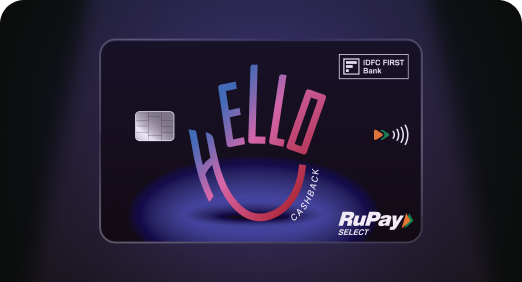

Enjoy Zero Forex on all IDFC FIRST Bank Credit Cards
Save more on all international spends
Know More
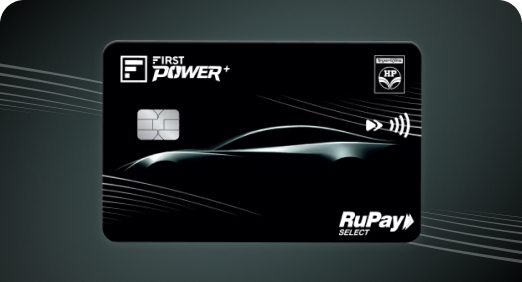
A Card that Powers your Savings & Lifestyle
IDFC FIRST Bank HPCL Credit Card








Most Searched
Earn up to 7% interest on your Savings Account
Open Account Now
Download our app
Get instant help for all your queries in one place
Unlock features, exclusively available
only on the IDFC FIRST Bank app
Trusted by 1.2+ million Indians.


4.8

4.8

Tools & Calculators
Privilege Program



Tools & Calculators

Unlock features, exclusively available
only on the IDFC FIRST Bank app
 RBI purpose codes identify the reason for every inward remittance to India and are mandatory for FEMA compliance and faster transaction processing.
Incorrect or missing purpose codes can lead to delays, bank queries, transaction rejection, and tax or compliance issues.
RemitFirst2India by IDFC FIRST Bank simplifies remittances by helping users select the correct RBI purpose code and ensuring compliant transfers.
RBI purpose codes identify the reason for every inward remittance to India and are mandatory for FEMA compliance and faster transaction processing.
Incorrect or missing purpose codes can lead to delays, bank queries, transaction rejection, and tax or compliance issues.
RemitFirst2India by IDFC FIRST Bank simplifies remittances by helping users select the correct RBI purpose code and ensuring compliant transfers.
Introduction
If you’ve ever sent money to India or received funds from abroad, you may have come across something called a purpose code. It’s often filled in quickly, but it plays an important role.
The Reserve Bank of India (RBI) requires every inward remittance to include a valid purpose code. It helps identify why the money is being transferred, whether it’s for family support, freelance payments, or business income.
In this article, you’ll learn what purpose codes are, why they matter, and how to choose the right one.
A purpose code is a short code set by the RBI that explains why money is being sent to India. It helps banks identify the reason for the transfer, such as family support, salary, or payment for services and ensures the transaction follows FEMA rules.
India received nearly USD 135.46 billion in Inward Remittances in FY25 according to RBI. Accurate management of these flows is essential for the country's financial system. Purpose codes help the Reserve Bank of India (RBI) to track the sources and uses of these funds.
Purpose codes are required for the following reasons:
Under FEMA, every inward foreign exchange transaction must be classified using the correct code. There is no minimum threshold.
The RBI uses purpose code data to compile India's BoP (Balance of Payments) statistics, which show the country's economic relationship with the rest of the world.
Banks use purpose codes as part of their AML checks. Inaccurate or unclear codes may result in a transaction being flagged for review.
Accurate coding is important for income tax purposes. For example, gifts and salaries are taxed differently, and the purpose code helps establish the nature of the payment.
Transfers with valid codes are processed more efficiently. Incorrect or missing codes can result in queries, delays, or rejection.
The RBI maintains a comprehensive list of purpose codes for inward remittance, covering personal transfers, business income, and more. The following are the most used codes:
| Code | Purpose | Function |
| P1301 | Family maintenance and personal support | NRIs sending money to parents, spouses, or children |
| P0101 | Export of goods (bills negotiated/purchased) | Indian exporters receiving payment for goods shipped |
| P0802 | IT and software service exports | Freelancers and tech professionals paid by foreign clients |
| P1007 | Education-related receipts | Students receiving tuition/scholarship funds from abroad |
| P1002 | Medical treatment receipts | Individuals receiving funds for healthcare expenses in India |
| P0006 | Foreign Direct Investment (equity) | Businesses receiving FDI into Indian equity |
| P0014 | Receipts into NRE or FCNR deposits | NRIs crediting foreign earnings into NRE or FCNR accounts |
| P0008 | FDI in real estate | Property-related investment transfers |
This list is not exhaustive. The full RBI purpose code list for inward remittance includes categories such as capital account transactions, trade credits, and insurance receipts. Your bank or remittance platform can help identify the most appropriate code for your transaction.
Using an incorrect purpose code is a common and avoidable cause of delays or issues with inward remittances. The following problems may occur:
The bank may place the transfer on hold until you provide supporting documents that match the declared purpose. Fixing this can take several working days.
In some cases, a misclassified transfer may be returned to the sender, particularly if the code does not match the receiving account type.
Misclassifying a payment as business income rather than a personal gift, or vice versa, can create issues during income tax filing or assessment.
Repeated conflicts between purpose codes and actual transaction details can draw regulatory attention, which should be avoided.
A usual challenge in managing inward remittances is that many senders are unsure about which purpose code applies to their situation. The RBI's full code list includes numerous categories, some of which overlap and are not always clear.
RemitFirst2India by IDFC FIRST Bank handles this issue directly. The platform guides users through the transfer process and assigns the correct RBI purpose code based on the transaction's nature for instance Transfer to Family, Self Transfer. This reduces errors and ensures funds reach the recipient's account without excessive delay.
The platform also supports:
FEMA-aligned workflows for all inward transfers
Competitive foreign exchange rates with honest pricing
Fast credit to Indian accounts with digital tracking
Purpose codes for inward remittance are not purely paperwork. They are a mandatory component of India's foreign exchange framework, ensuring that cross-border money transfers remain transparent, compliant, and well-documented.
For anyone sending or receiving international transfers, understanding which RBI purpose code applies to your transaction is worth the extra time. It helps prevent delays, maintain accurate records, and secures compliance with FEMA requirements.
If you are unsure which code applies to your situation, RemitFirst2India is designed to simplify the process and ensure your transfers are completed smoothly every time.
It is a code used to identify the reason for sending money to India, such as family support, education, or business payments.
The correct code ensures FEMA compliance, faster processing, and accurate tax and regulatory reporting.
Incorrect codes can lead to delays, bank queries, transaction rejection, or compliance issues.
The features, benefits and offers mentioned in the article are applicable as on the day of publication of this blog and is subject to change without notice. The contents herein are also subject to other product specific terms and conditions and any third party terms and conditions, as applicable. Please refer our website www.idfcfirst.bank.in for latest updates.