






Login to Internet banking
A brand-new experience - smarter, faster, and secured



BRAVO (Auto Sweep)
Convert the idle funds in your current account into a fixed deposit with the BRAVO feature.
Know More

Zero Forex Markup Current Account
Maximise your savings and boost profitability with our Zero Forex Markup current accounts
Know More
BRAVO (Auto Sweep)
Convert the idle funds in your current account into a fixed deposit with the BRAVO feature.
Know More
You gain a dedicated partner committed to helping you reach your full potential and achieve new heights
Know More





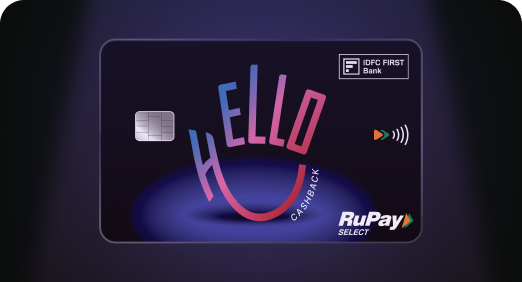

Enjoy Zero Forex on all IDFC FIRST Bank Credit Cards
Save more on all international spends
Know More
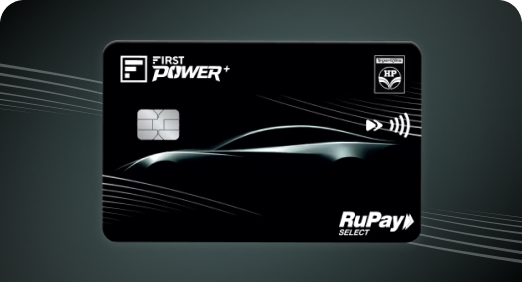
A Card that Powers your Savings & Lifestyle
IDFC FIRST Bank HPCL Credit Card








Most Searched
Earn up to 7% interest on your Savings Account
Open Account Now
Download our app
Get instant help for all your queries in one place
Unlock features, exclusively available
only on the IDFC FIRST Bank app
Trusted by 1.2+ million Indians.


4.8

4.8

Tools & Calculators
Privilege Program



Tools & Calculators

Unlock features, exclusively available
only on the IDFC FIRST Bank app
Savings Account
 Diwali spending often runs into six figures for many urban households, so tallying it up soon after the festival helps course-correct quickly.
Clearing high-interest credit card dues before anything else can save a good deal of money in interest over the following months.
Rebuilding your emergency fund to 3 to 6 months of expenses, through small fixed transfers, brings your finances back to a stable footing.
A clear post-Diwali money review helps you spot festive overspending before it turns into a longer-term problem. Learning to track personal expenses right after the celebrations gives you an accurate picture of where your money went and what needs fixing. Here is a simple step-by-step way to review your Diwali spending and get your finances back on track.
Diwali brings gifting, shopping, travel, and get-togethers that can push you over your usual monthly budget. According to a nationwide festive spending survey, close to half of urban Indian households cross ₹1 lakh in overall Diwali spending each year, much of it spread across small, easy-to-miss purchases.
Diwali expenses often include untracked cash spends on décor, sweets, and pooja items that rarely show up on a bank statement. Reviewing your accounts and cash spending soon after the festival, while the details are still fresh, makes it easier to spot where the money went.
Start by listing every festive expense in one place, including gifts, new clothes, sweets, decorations, travel, and eating out. Check your bank statements, UPI history, and credit card bills together, since festive spending is often split across several payment modes.
For example, ₹15,000 on gifts, ₹20,000 on shopping, ₹8,000 on eating out, and ₹7,000 on travel adds up to ₹50,000 in total Diwali spending. Having one combined figure like this makes it easier to judge whether your festive spending stayed within reason.
Festive spending on cards can catch up with you quickly if it is not reviewed properly. Check the following before your next due date:
Total outstanding – Note the full amount due on each card.
Due dates – List every card and EMI due date for the next month to avoid late fees.
New EMIs – Check any purchases converted into EMIs during the festive sales and their monthly instalment amount.
Interest cost – Paying only the minimum due on a credit card can attract interest of 2.5% to 4% a month, which works out to roughly 30% to 48% a year.
Once festive dues are accounted for, shift focus to your regular monthly expenses. Use your bank and card statements from the last month to track personal expenses across categories like groceries, bills, transport, and subscriptions.
A simple way to do this is to split spending into needs, wants, and savings, roughly in a 50-30-20 ratio of your take-home pay. Seeing these numbers side by side shows whether festive spending has crowded out your regular budget.
With a clear expense list in hand, look for categories you can trim over the next month or two:
Unused subscriptions – Cancel subscriptions or memberships that went unused.
Dining out – Cut back on eating out for a few weeks to offset festive food and gifting costs.
Impulse buys – Pause discretionary online shopping until your post-festive dues are cleared.
Duplicate purchases – Return or exchange festive gifts and decor items you already have duplicates of.
With festive dues and trimmed expenses factored in, rework your budget for the next one or two months. Prioritise clearing high-interest credit card dues first, since they cost far more than most other monthly expenses.
Once dues are cleared, gradually shift your budget back to its usual needs, wants, and savings split. Revisit this budget every few weeks until your spending pattern feels normal again.
Festive spending often eats into savings set aside for emergencies, so rebuilding this cushion should be a priority once regular dues are cleared. Most financial experts recommend keeping 3 to 6 months of essential expenses in an emergency fund.
For example, if your essential monthly expenses are around ₹30,000, aim to rebuild your fund to somewhere between ₹90,000 and ₹1,80,000 over the next few months. Saving that money in the IDFC FIRST Bank Savings Account is a good way to get there, especially with interest up to 7% p.a. credited monthly rather than every quarter.
A short review after Diwali can turn festive overspending into a manageable, short-term reset rather than months of financial strain. Add up what you spent, clear high-interest dues first, tighten a few categories, and rebuild your savings step by step. A little discipline over the next couple of months is usually enough to bring your finances back on track.
Start by listing all festive expenses and clearing high-interest credit card dues before anything else. Once these are settled, gradually cut back on discretionary spending for a month or two to bring your budget back to normal.
There is no fixed number, but many lenders use a benchmark of keeping total EMI and card repayments under 40% to 50% of take-home income. Staying within this range leaves enough room for regular expenses and savings while dues are cleared.
Aim to build, or rebuild, your emergency fund to 3 to 6 months of essential expenses, adding to it through fixed monthly transfers rather than lump sums. For instance, saving ₹10,000 to ₹15,000 a month can help you rebuild a fund of over ₹1 lakh within a year.
The contents of this article/infographic/picture/video are meant solely for information purposes. The contents are generic in nature and for informational purposes only. It is not a substitute for specific advice in your own circumstances. The information is subject to updation, completion, revision, verification and amendment and the same may change materially. The information is not intended for distribution or use by any person in any jurisdiction where such distribution or use would be contrary to law or regulation or would subject IDFC FIRST Bank or its affiliates to any licensing or registration requirements. IDFC FIRST Bank shall not be responsible for any direct/indirect loss or liability incurred by the reader for taking any financial decisions based on the contents and information mentioned. Please consult your financial advisor before making any financial decision.
The features, benefits and offers mentioned in the article are applicable as on the day of publication of this blog and is subject to change without notice. The contents herein are also subject to other product specific terms and conditions and any third party terms and conditions, as applicable. Please refer our website www.idfcfirst.bank.in for latest updates.


You will earn