







Login to Internet banking
A brand-new experience - smarter, faster, and secured


BRAVO (Auto Sweep)
Convert the idle funds in your current account into a fixed deposit with the BRAVO feature.
Know More

Zero Forex Markup Current Account
Maximise your savings and boost profitability with our Zero Forex Markup current accounts
Know More
BRAVO (Auto Sweep)
Convert the idle funds in your current account into a fixed deposit with the BRAVO feature.
Know More
You gain a dedicated partner committed to helping you reach your full potential and achieve new heights
Know More





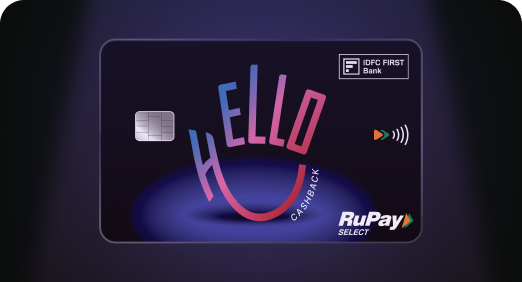

Enjoy Zero Forex on all IDFC FIRST Bank Credit Cards
Save more on all international spends
Know More
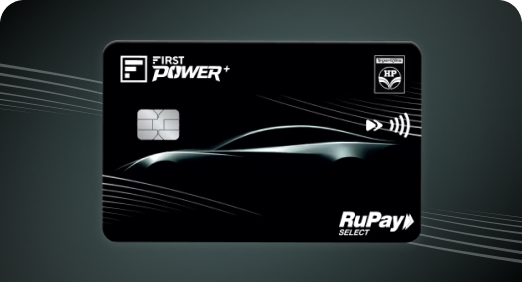
A Card that Powers your Savings & Lifestyle
IDFC FIRST Bank HPCL Credit Card









Most Searched
Earn up to 7% interest on your Savings Account
Open Account Now
Download our app
Get instant help for all your queries in one place
Unlock features, exclusively available
only on the IDFC FIRST Bank app
Trusted by 1.2+ million Indians.


4.8

4.8

Tools & Calculators
Privilege Program



Tools & Calculators

Unlock features, exclusively available
only on the IDFC FIRST Bank app
Savings Account
 A zero-balance account suits anyone whose income or spending changes from month to month, since it removes the monthly balance target.
Students, salaried professionals, freelancers and retirees benefit in different ways, from flexible spending to interest credits and deposit insurance.
Comparing balance requirements with cash flow is a useful first step when choosing between account variants.
For those wondering who can open a zero-balance account, it can suit anyone who wants everyday banking without a monthly balance target, including students, salaried professionals, freelancers and retirees. Each group uses the account differently, so the right fit depends on income pattern, spending habits and comfort with digital banking. This guide explains what a zero-balance account offers, why balance requirements matter and how each group can make the most of it.
A zero-balance savings account lets you bank without maintaining a minimum monthly balance. The Quantum+ Savings Account from IDFC FIRST Bank follows this approach and adds monthly interest credits of up to 7% p.a.
It works as a digital savings account, so you can open it in minutes through the IDFC FIRST Bank Mobile App. If a small initial deposit is requested during opening, it is not a fee or a balance requirement, and the amount stays available for you to use.
A minimum average balance (MAB) is the amount a bank asks you to maintain in an account on average each month, and every account variant sets its own level. Under RBI norms, every bank also offers a Basic Savings Bank Deposit (BSBD) account with no minimum balance requirement, which IDFC FIRST Bank provides as the Pratham Savings Account.
Matching the requirement to your cash flow keeps banking simple. IDFC FIRST Bank offers other variants of savings account than the zero balance accounts too, and the ₹25,000 average monthly balance variant, for example, comes with a World Mastercard Debit Card carrying free Personal Accident Insurance Cover of ₹35 lakh. A zero balance variant fits better when your balance changes from month to month.
A zero balance account is suited to students because pocket money and allowances rarely stay at a fixed level. Students benefit in three ways:
No balance target - Allowance credits can be spent freely without holding back a set amount.
App-based banking - UPI payments, transfers and statements stay available on the phone.
Early habits - Tracking small credits and debits builds budgeting skills.
Students who are resident individuals above 18 years of age with valid PAN, Aadhaar and an Aadhaar-linked mobile number can apply for the Quantum+ Savings Account. Younger students can explore the Minor Savings Account from IDFC FIRST Bank, since RBI norms only allow minors to hold accounts through a guardian.
Salaried professionals can use the account for goals such as travel or emergencies, while freelancers can use it when income arrives in uneven amounts. The zero-balance account benefits for both groups centre on flexibility.
Income flexibility - Gaps between salary credit and client payments do not require a balance top-up.
Idle funds - Money waiting for the next payment or salary credit still earns interest.
Easy tracking - Payments and statements in a mobile app make it simpler to plan around shifting payment dates.
Retirees and pensioners often prefer zero-balance accounts because pension credits arrive in fixed amounts while expenses vary throughout the month. A zero-balance account supports this pattern in three ways:
Simple upkeep - No balance target means pension and savings can be organised freely.
Interest credits - Balances keep earning interest, which adds to pension income.
Deposit insurance - Deposits are insured up to ₹5 lakh per depositor per bank under DICGC, including principal and interest securing the saved amount.
A zero balance savings account suits students, salaried professionals, freelancers and retirees, each for different reasons. Students gain flexible spending, salaried professionals and freelancers gain freedom from balance top-ups, and retirees gain simple upkeep with insured deposits. Comparing balance requirements with cash flow remains a useful starting point when choosing between variants.
Eligibility for the Quantum+ Savings Account is based on residency and KYC documents, not on income. Resident individuals above 18 years of age with valid PAN, Aadhaar and an Aadhaar-linked mobile number can apply, while customers who hold or have held a savings account or fixed deposit with IDFC FIRST Bank are not eligible.
A zero-balance account carries no minimum balance requirement, and any initial deposit requested during opening is not a fee. Charges, if any, apply to optional services and are published in the bank's schedule of fees and charges, which you should review before applying.
Moving to another variant is handled by the bank upon request. Customers can reach IDFC FIRST Bank through the mobile app or 24x7 customer care to confirm the steps and conditions. Compare the balance requirements of the new variant before switching.
The contents of this article/infographic/picture/video are meant solely for information purposes. The contents are generic in nature and for informational purposes only. It is not a substitute for specific advice in your own circumstances. The information is subject to updation, completion, revision, verification and amendment and the same may change materially. The information is not intended for distribution or use by any person in any jurisdiction where such distribution or use would be contrary to law or regulation or would subject IDFC FIRST Bank or its affiliates to any licensing or registration requirements. IDFC FIRST Bank shall not be responsible for any direct/indirect loss or liability incurred by the reader for taking any financial decisions based on the contents and information mentioned. Please consult your financial advisor before making any financial decision.
The features, benefits and offers mentioned in the article are applicable as on the day of publication of this blog and is subject to change without notice. The contents herein are also subject to other product specific terms and conditions and any third party terms and conditions, as applicable. Please refer our website www.idfcfirst.bank.in for latest updates.


You will earn