








Login to Internet banking
A brand-new experience - smarter, faster, and secured




You gain a dedicated partner committed to helping you reach your full potential and achieve new heights
Know More

BRAVO (Auto Sweep)
Convert the idle funds in your current account into a fixed deposit with the BRAVO feature.
Know More
Zero Forex Markup Current Account
Maximise your savings and boost profitability with our Zero Forex Markup current accounts
Know More






A Card that Powers your Savings & Lifestyle
IDFC FIRST Bank HPCL Credit Card









Most Searched
Earn up to 7% interest on your Savings Account
Open Account Now
Download our app
Get instant help for all your queries in one place
Unlock features, exclusively available
only on the IDFC FIRST Bank app
Trusted by 1.2+ million Indians.


4.8

4.8

Tools & Calculators
Privilege Program



Tools & Calculators

Unlock features, exclusively available
only on the IDFC FIRST Bank app
Credit Card
 Credit card swipe charges, also known as interchange fees, are determined by the card network and are typically paid by merchants for processing transactions.
Although customers do not pay these charges directly, they may indirectly bear the cost through slightly higher product prices or restricted payment options.
Understanding the payment process, including gateways, processors, and issuing banks, can help you better evaluate how transactions are completed.
Being aware of swipe charges can enable you to make informed payment choices, manage expenses effectively, and maximise rewards without unexpected costs.
Credit card swipe charges, also known as interchange fees, are determined by the card network and are typically paid by merchants for processing transactions.
Although customers do not pay these charges directly, they may indirectly bear the cost through slightly higher product prices or restricted payment options.
Understanding the payment process, including gateways, processors, and issuing banks, can help you better evaluate how transactions are completed.
Being aware of swipe charges can enable you to make informed payment choices, manage expenses effectively, and maximise rewards without unexpected costs.
Understanding how your credit card works is one of the smartest financial habits you can build. Knowing the terms, features, and charges upfront helps you avoid unnecessary penalties, manage your spending better, and get the most value from your card. The more you know, the more confidently you can use it.
While there are many things to know about a credit card, we'll focus on "credit card swipe charges" or simply "swipe fees" in this article. Continue reading to learn more about "swipe machine fees", certain terms, and the entire process for credit card payments.
Before getting into credit card swipe charges, let us first understand credit card-related terminologies. Here is a summary of the relevant terms:
The bank that gives you your credit card is called the "issuing bank." For instance, if you get IDFC FIRST Bank’s Millennia credit card , IDFC FIRST Bank will be the issuing bank.
The acquiring bank accepts credit card transactions made by you. The acquiring bank is registered with a credit card network and accepts transactions on the network on behalf of the merchant.
A payment gateway relays information between two key stakeholders in a credit card transaction – a payment portal (such as a website to book movie tickets or an e-commerce website) and your bank's processor. It also authorizes responses from the credit card issuing bank to the payment portal. This exchange of information takes place at the payment gateway.
The merchant contacts the issuing bank through a payment processor. The payment processor secures payment-related information and transmits it to other parties.
Merchants can contact the issuing bank through the credit card network. Credit card swipe charges, too, are set by the credit card network.
Credit card swipe charges are determined by the credit card network consisting of the issuing bank.
We can now understand "credit card swipe fee" better with a preliminary understanding of the related terms. A credit card swipe fee is also known as an "interchange fee" and is determined by the credit card network.
For instance, if you get IDFC FIRST Bank’s Millennia credit card, Visa will fix credit card swipe charges.
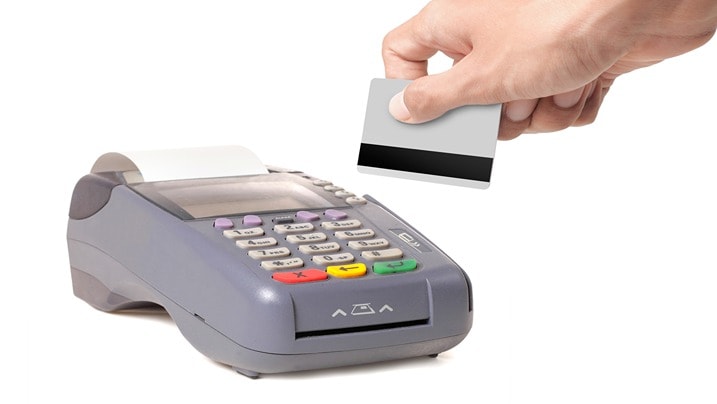
Here is what happens when we swipe our credit card at a Point of Sale (PoS) machine:
· The cardholder swipes their credit card at a PoS terminal. The PoS terminal has a "card reader" that reads credit card information. The merchant uses a payment gateway to collect this information.
· The payment gateway transmits the transaction's information to the payment processor.
· The payment processor relays this information to the credit card network.
· This information is received by the issuing bank, which verifies the card details. The issuing bank informs the credit card network whether it approves or denies a transaction after checking whether the card has the required balance and checking for any fraudulent details.
· The credit card network relays this information to the payment processor, which relays it to the card reader.
Credit cardholders must remember that merchants and, sometimes, issuing banks charge credit card swipe fees every time the credit cardholder makes a payment using their credit card. With this final point, let's summarize credit card swipe fees in a few points:
· When you make a credit card transaction, a "credit card swipe fee" is charged by the merchant.
· The credit card swipe fee is determined by the credit card network, consisting of the issuing bank.
· The Reserve Bank of India (RBI) regulates issuing banks' credit card swipe charges.
· Credit card swipe charges amount to approximately 2% of all transactions involving a physical credit card; and 2.3-2.5% of online transactions.
Although swipe charges are primarily borne by merchants, they can indirectly influence your overall spending experience. These charges are typically a percentage of the transaction amount paid by the merchant to the bank or payment network. However, in some cases, businesses may factor these costs into their pricing strategy.
Higher product pricing: Merchants may slightly increase the price of goods or services to offset swipe charges, which can lead to a marginal rise in your overall expenses.
Limited payment options: Some smaller merchants may prefer cash or UPI payments to avoid these fees, restricting your ability to use Credit Cards in certain places.
Minimum transaction requirements: You may notice minimum billing amounts at certain outlets for card usage, introduced to manage transaction costs.
Discount variations: Occasionally, discounts offered on cash payments may be higher than those on card payments, due to the associated charges.
While the impact may not always be directly visible, being aware of how swipe charges influence pricing can help you make more informed payment decisions.
Understanding Credit Card swipe charges can help you manage your expenses more efficiently and use your card wisely. Here are some key benefits:
Better decision-making: Knowing these charges can enable you to choose between card, cash, or digital payments, depending on the situation.
Clarity on total costs: It can help you understand the complete cost of a transaction beyond just the purchase value.
Improved budgeting: Awareness of additional charges allow you to plan your monthly expenses more effectively.
Maximising rewards: You can evaluate whether the rewards or cashback earned outweigh the indirect costs associated with card usage.
Avoiding billing surprises: Tracking such charges can ensure there are no unexpected costs in your monthly statement.
The key to using your credit card effectively is learning everything about the product, including concepts such as swipe charges and other credit card charges . Knowing the details of swipe charges is an important step in understanding the full potential of a credit card and how it can best be used for your benefit.
The issuing bank is the bank that provides your credit card. For example, if you hold the FIRST Millennia Credit Card, IDFC FIRST Bank is the issuing bank.
Knowing the charges upfront helps you avoid unnecessary penalties, plan your spending, and get the most value from your card. It also helps you compare cards more effectively before applying.
Common charges include the joining fee, annual fee, interest on outstanding balances, late payment fees, cash advance fees, and foreign currency markup. The exact charges vary by card.
Pay your full outstanding balance by the due date every month. Interest usually applies only when you carry a balance forward or make cash withdrawals.
No. Many IDFC FIRST Bank credit cards, including the FIRST Millennia and FIRST Classic, are lifetime free with no joining or annual fee.
The features, benefits and offers mentioned in the article are applicable as on the day of publication of this blog and is subject to change without notice. The contents herein are also subject to other product specific terms and conditions and any third party terms and conditions, as applicable. Please refer our website www.idfcfirst.bank.in for latest updates.