







Login to Internet banking
A brand-new experience - smarter, faster, and secured





BRAVO (Auto Sweep)
Convert the idle funds in your current account into a fixed deposit with the BRAVO feature.
Know More

Zero Forex Markup Current Account
Maximise your savings and boost profitability with our Zero Forex Markup current accounts
Know More
BRAVO (Auto Sweep)
Convert the idle funds in your current account into a fixed deposit with the BRAVO feature.
Know More

You gain a dedicated partner committed to helping you reach your full potential and achieve new heights
Know More





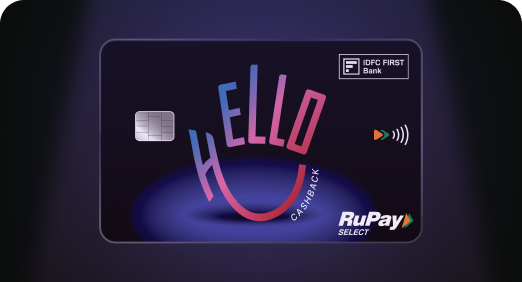

Enjoy Zero Forex on all IDFC FIRST Bank Credit Cards
Save more on all international spends
Know More
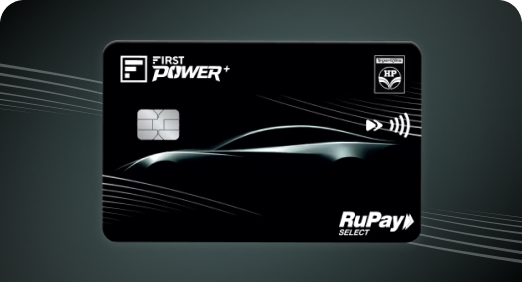
A Card that Powers your Savings & Lifestyle
IDFC FIRST Bank HPCL Credit Card








Most Searched
Earn up to 7% interest on your Savings Account
Open Account Now
Download our app
Get instant help for all your queries in one place
Unlock features, exclusively available
only on the IDFC FIRST Bank app
Trusted by 1.2+ million Indians.


4.8

4.8

Tools & Calculators
Privilege Program



Tools & Calculators

Unlock features, exclusively available
only on the IDFC FIRST Bank app
Credit Card
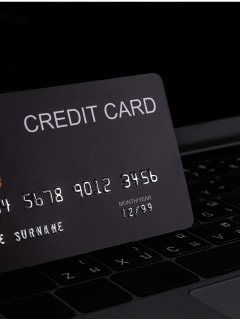
 Card Verification Value (CVV) is a security code printed on a credit or debit card, mainly used to verify card-not-present transactions and add an extra layer of payment security.
The location of the CVV varies across Visa, Mastercard, RuPay and American Express cards, so knowing where to find it can make online payments easier.
CVV and PIN serve different purposes. Never share either security credential with anyone during a transaction.
Protect your CVV carefully and report any suspected compromise to your card issuer promptly to reduce the risk of unauthorised transactions.
Credit cards make online and offline payments convenient, but using them safely requires an understanding of their security features. One such feature is the CVV, a security code commonly requested during online purchases.
Understanding the CVV full form, its location and how it works can help you use your credit card more securely. This guide explains what CVV is, where to find it, when it is required and how it differs from your credit card PIN.
CVV stands for Card Verification Value. It is a three- or four-digit security code associated with a payment card. On most Visa, Mastercard and RuPay cards, the CVV is a three-digit code printed on the back of the card. American Express generally uses a four-digit security code on the front.
The CVV provides an additional layer of verification, particularly for card-not-present transactions such as online or telephone purchases. It helps the payment system check that the person making the transaction has access to the card details. Visa describes CVV2 as a three-digit security code used primarily for e-commerce and other card-not-present transactions.
The security code may have different names (depending on the payment network). Common terms include:
Term |
Meaning |
CVV |
Card Verification Value |
CVC |
Card Verification Code |
CSC |
Card Security Code |
CID |
Card Identification Number |
Although the terminology differs, these codes serve a similar purpose: providing an additional security check for card transactions. American Express, for example, refers to its four-digit code as the CID or security code.
Your CVV adds an important security layer to card payments, but protecting it remains your responsibility.
The location of the CVV depends on the card network. Before entering your CVV online, check the physical card carefully rather than assuming that it is in the same place on every card.
For most Visa, Mastercard and RuPay credit cards , the three-digit CVV is printed on the back of the card, generally around the signature panel.
For example, IDFC FIRST Bank's credit-card guide identifies the CVV/security code as a three-digit code printed on the back of the card and required for online payments.
Do not confuse the CVV with your card number, expiry date or PIN. These are separate pieces of information and have different purposes.
American Express generally uses a four-digit security code printed on the front of the card, above the card number. This is commonly referred to as the CID or security code.
Therefore, if you are using an American Express card, do not look for a three-digit CVV on the back when an online merchant asks for the card security code.
If you have a virtual or digital card, there may not be a physical card from which you can read the CVV. Instead, the card's details, including its security code, may be available through the issuer's authorised mobile banking app or digital card interface.
For example, the FIRST EA₹N Credit Card from IDFC FIRST Bank is a virtual card with its own card number, expiry date and CVV, and it can be accessed through the IDFC FIRST Bank mobile banking app. It can be used for online transactions and UPI payments after linking it to a supported UPI app.
Only access such details through the official banking application. Never ask another person to provide your CVV or share it through messages, email or social media.
The CVV is generated using secure processes involving card and issuer-related information. For Visa, CVV2 is generated through a cryptographic process using a key known to the issuer and Visa. The resulting value is then associated with the card for verification purposes.
You should not attempt to calculate, guess or reproduce your CVV. It is a security credential that should be protected in the same way as other sensitive card information.
The CVV exists in two forms: CVV1 and CVV2, it refers to different forms of card verification values.
CVV1 is associated with card data used in card-present environments, historically including information encoded on the magnetic stripe.
CVV2 is the security code printed on the card and is primarily used for card-not-present transactions such as online purchases.
In practical terms, the code you are usually asked to enter during an online card payment is the printed CVV/CVV2. Visa identifies CVV2 validation as a mechanism used primarily in e-commerce and other card-not-present environments.
A CVV is most commonly requested when the card is not physically presented to the merchant. However, the exact requirement depends on the merchant, payment method, card network and issuer.
During online shopping, subscriptions or telephone orders, a merchant may ask for your card number, expiry date and CVV. The CVV provides an additional check alongside the other card details.
For example, when you purchase a product from an online store using an IDFC FIRST Bank credit card, the merchant may request the CVV before processing the payment. Additional authentication, such as an OTP or other verification, may also be required (depending on the transaction).
CVV is generally not required when you use your physical card at a point-of-sale terminal. The transaction is authenticated through methods such as chip-and-PIN or contactless payment, depending on the card, terminal and applicable transaction rules.
IDFC FIRST Bank also allows customers to manage transaction preferences through its mobile banking app, including online, contactless and international transactions.
A CVV and a PIN are both security credentials, but they serve different purposes.
Feature |
CVV |
Credit Card PIN |
Purpose |
Verifies card details during applicable transactions |
Authenticates the cardholder for applicable transactions |
Format |
Usually 3 digits; 4 digits for some cards |
Usually a 4-digit confidential number |
Common use |
Online/card-not-present payments |
ATM and applicable POS transactions |
Location |
Printed on the card or available digitally |
Secret code generated/set for the card |
Should it be shared? |
No |
No |
IDFC FIRST Bank's card guide states that the CVV is required for online payments, while the credit card PIN is used at offline merchant terminals.
Online merchants generally do not need your credit card PIN because the PIN is intended for specific authentication environments such as ATMs and applicable point-of-sale transactions. Asking you to provide your PIN to an online merchant could expose a highly sensitive credential.
The CVV, in contrast, is specifically designed as an additional verification value for card-not-present transactions. You should still enter it only on a legitimate and secure payment page.
If an online merchant, caller or individual asks you to disclose your card PIN, OTP or other confidential banking credentials, do not provide them.
CVV helps reduce the risk of fraudulent card-not-present transactions by adding a security check beyond the card number and expiry date. Someone who obtains only your card number may still be unable to complete a transaction that requires CVV verification.
Visa notes that CVV2 validation can help merchants verify that a customer has the card or its relevant security information during an internet or telephone transaction.
However, CVV is not a guarantee against fraud. If a fraudster obtains your card number, expiry date and CVV, they may attempt an unauthorised transaction. Other security measures such as OTPs, transaction alerts, authentication systems and card controls provide additional protection.
For users who prefer digital payments, virtual cards can provide another layer of convenience. IDFC FIRST Bank's virtual credit cards are among the best credit cards in India , with simple digital card details that can be accessed and managed through digital banking channels.
Treat your CVV as confidential card information. Following a few basic precautions can reduce the risk of misuse:
Never share your CVV: Do not disclose it to callers, merchants, delivery agents or anyone claiming to represent your bank.
Use trusted websites: Check the website address and security indicators before entering card details.
Avoid public devices: Do not save your card details on shared computers or unknown devices.
Do not send card details over messages: Avoid sharing your card number, expiry date or CVV through email, SMS, messaging apps or social media.
Monitor transactions: Check your credit card statements and transaction alerts regularly.
Use banking controls: Where available, manage online, contactless and international transaction settings through your bank's official app.
Never share your PIN or OTP: These are separate confidential credentials and should not be disclosed.
IDFC FIRST Bank also advises customers to keep sensitive information such as card details, CVV and OTPs secure and not share them through email, phone or SMS.
If you believe that your CVV has been exposed, contact your card issuer through its official customer-service channel immediately. Check recent transactions and report anything you do not recognise.
Depending on the circumstances, the issuer may recommend temporarily blocking the card or replacing it with a new one. A replacement card generally comes with new card credentials, including a new security code.
You should also change passwords for accounts where the compromised card was saved and remove the card from unfamiliar or unauthorised digital wallets.
The CVV full form is Card Verification Value, and it is an important security feature on most credit and debit cards. It provides an additional verification layer, particularly for online and other card-not-present transactions.
You can also understand the differences between payment options by pitting a debit card vs a credit card and comparing how their features, security mechanisms and usage requirements differ.
CVV stands for Card Verification Value. It is a security code used to verify that you have access to the physical credit card during online or card-not-present transactions. Usually, it is a three-digit number printed on the back of the card. Some cards may use a different verification code format.
For most credit cards, the CVV is a three-digit number printed on the back of the card, usually near the signature panel. You may need to enter it when making online purchases or other transactions where the physical card is not presented.
The CVV alone is generally not enough to complete a credit card transaction. However, if someone has other card details, such as the card number, expiry date and CVV, they may attempt an unauthorised online transaction. Therefore, never share your CVV, card number, PIN or OTP with anyone.
No. A CVV is a card security code, while a PIN (Personal Identification Number) is used to authenticate certain transactions, particularly those involving a physical card or ATM.
If you do not have your physical card, check your bank's official mobile banking app or internet banking portal, if it securely displays your card details. Otherwise, contact your card issuer through its official customer service channel. Never rely on third-party websites or share your card credentials to retrieve the CVV.
The contents of this article/infographic/picture/video are meant solely for information purposes. The contents are generic in nature and for informational purposes only. It is not a substitute for specific advice in your own circumstances. The information is subject to updation, completion, revision, verification and amendment and the same may change materially. The information is not intended for distribution or use by any person in any jurisdiction where such distribution or use would be contrary to law or regulation or would subject IDFC FIRST Bank or its affiliates to any licensing or registration requirements. IDFC FIRST Bank shall not be responsible for any direct/indirect loss or liability incurred by the reader for taking any financial decisions based on the contents and information mentioned. Please consult your financial advisor before making any financial decision.
The features, benefits and offers mentioned in the article are applicable as on the day of publication of this blog and is subject to change without notice. The contents herein are also subject to other product specific terms and conditions and any third party terms and conditions, as applicable. Please refer our website www.idfcfirst.bank.in for latest updates.


Earn IndiGo BluChips | Redeem on IndiGo flights | Power of Dual cards | Zero Forex Mark Up

Movie discounts, Lounge, ₹2000 cashback, Zero Forex Mark Up, Golf, Spa access

Fuel Card, 5% fuel savings, 2.5% Grocery & Utility Savings, 0 interest cash

No Annual Fee, 25% Off on movie tickets, 24/7 Roadside assistance, 1% Fuel Surcharge waiver








Earn IndiGo BluChips | Redeem on IndiGo flights | Power of Dual cards | Zero Forex Mark Up
Know MoreMovie discounts, Lounge, ₹2000 cashback, Zero Forex Mark Up, Golf, Spa access
Know MoreFuel Card, 5% fuel savings, 2.5% Grocery & Utility Savings, 0 interest cash
Know MoreNo Annual Fee, 25% Off on movie tickets, 24/7 Roadside assistance, 1% Fuel Surcharge waiver
Know More