









Login to Internet banking
A brand-new experience - smarter, faster, and secured



You gain a dedicated partner committed to helping you reach your full potential and achieve new heights
Know More
BRAVO (Auto Sweep)
Convert the idle funds in your current account into a fixed deposit with the BRAVO feature.
Know More
Zero Forex Markup Current Account
Maximise your savings and boost profitability with our Zero Forex Markup current accounts
Know More





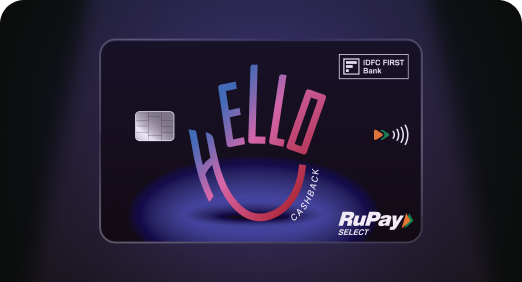
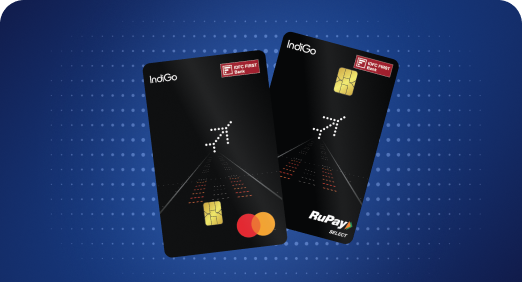

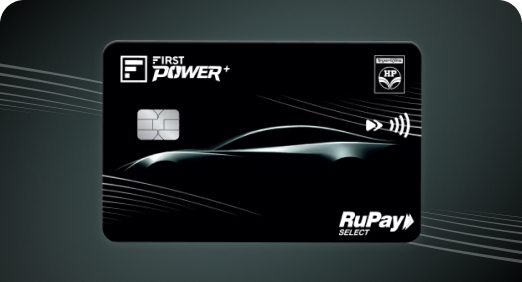
A Card that Powers your Savings & Lifestyle
IDFC FIRST Bank HPCL Credit Card









Most Searched
Earn up to 7% interest on your Savings Account
Open Account Now
Download our app
Get instant help for all your queries in one place
Unlock features, exclusively available
only on the IDFC FIRST Bank app
Trusted by 1.2+ million Indians.


4.8

4.8

Tools & Calculators
Privilege Program



Tools & Calculators

Unlock features, exclusively available
only on the IDFC FIRST Bank app

For most salaried individuals, the Employer Provident Fund (EPF account) is perhaps their first rendezvous with savings. Introduced under the Employer Provident Fund Organization (EPFO) and backed by the Government of India, the EPF is a low-risk savings plan, so you have little to worry about market fluctuations. Furthermore, there are many benefits of the EPF account that make it fairly popular.
But do you know what happens to your account if you quit your job and no longer earn a salary?
Is it terminated, or does your money continue to grow? Let’s find out!
Your EPF account is linked to your employment. When working at a company, the employer contributes to your account. If you quit, you will no longer receive the employer’s contributions. You will also be unable to contribute to the account yourself if you are no longer in service. However, you can keep the EPF account as it is. In this case, your account will still be active and earn interest on the accumulated balance. You can also make an EPF bank account link without an employer by visiting the UAN website to update your bank details. The website also lets you check the balance, appoint nominees, etc.
The EPF account becomes inactive only in the following situations.
The EPF account offers numerous benefits, such as a steady EPF interest rate, tax free interest returns, financial security, and more. You also continue to earn further interest on your balance even if you quit your job and no longer contribute.
However, if you are out of work, you or your previous employer will not be able to contribute to your account. In such a case, you may benefit more from shifting to a bank savings account. The IDFC FIRST Bank Savings Account can be a good option as it offers high interest rates of up to 7.00%. It also provides excellent flexibility in terms of withdrawals and contributions. You can use it to save money for your future needs. Moreover, you also get a free personal accident insurance cover for Rs 35 Lakh and a free air accident insurance cover for Rs 1 Crore.
Retirement savings are critical and must continue whether you have a job or not. If you cannot use your EPF account, you should consider using a savings account instead. While you may not have employer contributions, you can still earn high interest and save for your future.
Disclaimer
The contents of this article/infographic/picture/video are meant solely for information purposes. The contents are generic in nature and for informational purposes only. It is not a substitute for specific advice in your own circumstances. The information is subject to updation, completion, revision, verification and amendment and the same may change materially. The information is not intended for distribution or use by any person in any jurisdiction where such distribution or use would be contrary to law or regulation or would subject IDFC FIRST Bank or its affiliates to any licensing or registration requirements. IDFC FIRST Bank shall not be responsible for any direct/indirect loss or liability incurred by the reader for taking any financial decisions based on the contents and information mentioned. Please consult your financial advisor before making any financial decision.
The features, benefits and offers mentioned in the article are applicable as on the day of publication of this blog and is subject to change without notice. The contents herein are also subject to other product specific terms and conditions and any third party terms and conditions, as applicable. Please refer our website www.idfcfirst.bank.in for latest updates.