








Login to Internet banking
A brand-new experience - smarter, faster, and secured


BRAVO (Auto Sweep)
Convert the idle funds in your current account into a fixed deposit with the BRAVO feature.
Know More

Zero Forex Markup Current Account
Maximise your savings and boost profitability with our Zero Forex Markup current accounts
Know More
BRAVO (Auto Sweep)
Convert the idle funds in your current account into a fixed deposit with the BRAVO feature.
Know More

You gain a dedicated partner committed to helping you reach your full potential and achieve new heights
Know More



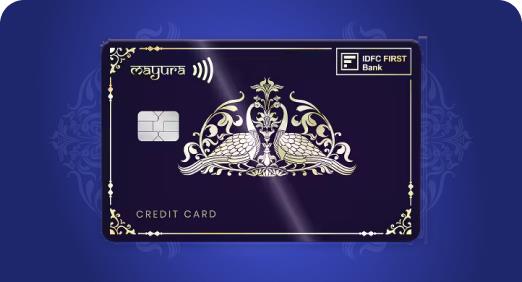

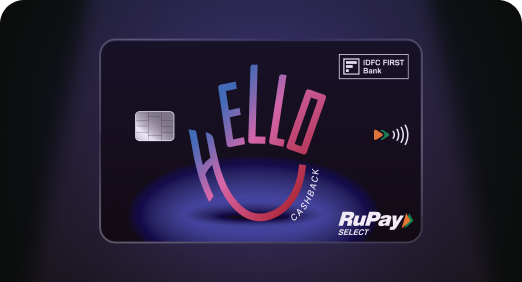

Enjoy Zero Forex on all IDFC FIRST Bank Credit Cards
Save more on all international spends
Know More
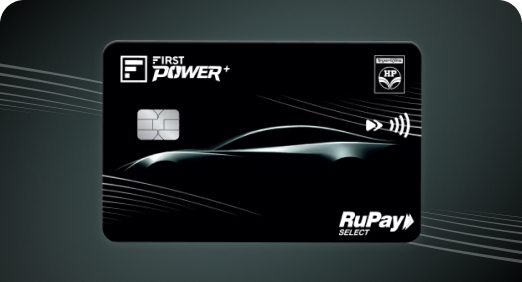
A Card that Powers your Savings & Lifestyle
IDFC FIRST Bank HPCL Credit Card








Most Searched
Earn up to 7% interest on your Savings Account
Open Account Now
Download our app
Get instant help for all your queries in one place
Unlock features, exclusively available
only on the IDFC FIRST Bank app
Trusted by 1.2+ million Indians.


4.8

4.8

Tools & Calculators
Privilege Program



Tools & Calculators

Unlock features, exclusively available
only on the IDFC FIRST Bank app
Finance
 A UTR number is a unique alphanumeric code assigned to each bank transfer that helps track the transaction.
You will find the UTR number in your bank statement, mobile banking app or transaction receipt under the reference or transaction ID field.
If a transfer is delayed or you want to verify the payment, the bank uses the UTR number to locate and resolve your transaction.
Keeping a record of the UTR number for high-value transfers helps you maintain proof of payment and supports your financial tracking.
A UTR number is a unique alphanumeric code assigned to each bank transfer that helps track the transaction.
You will find the UTR number in your bank statement, mobile banking app or transaction receipt under the reference or transaction ID field.
If a transfer is delayed or you want to verify the payment, the bank uses the UTR number to locate and resolve your transaction.
Keeping a record of the UTR number for high-value transfers helps you maintain proof of payment and supports your financial tracking.
You can send money to India in a few different ways. Services like NEFT and RTGS allow you to send funds overseas efficiently and quickly. However, even though both forms of money transfer are helpful, your transactions might get stuck sometimes. A UTR number comes in handy in such a situation, allowing you to track the status of your transaction. Read on as we delve deeper into what it means.
UTR number, short for Unique Transaction Reference number, is a distinctive code assigned to every transfer made to India. It serves as a unique identifier for each transaction, ensuring secure and traceable transfers. On the recipient's bank statement, the UTR number is prominently displayed alongside the received transfer details. The format of the UTR number may vary depending on the payment method used. With the UTR number, you can easily track and verify your transactions, providing peace of mind during financial transfers to India.
The UTR number is generated automatically the moment a transfer is initiated, and no two transactions ever share the same reference, regardless of the bank or branch involved. Since the number stays constant throughout the transaction's life, it works as a common reference point that both the sending and receiving bank can independently look up, which is what makes it reliable for verification and dispute resolution.
You can find the UTR number on your bank statement. Below each transaction's information, you can see the UTR number as Ref no. In India, UTR numbers frequently look like this:
XXXXR7310682908954385XX
Each UTR number has a few characters that change depending on the bank that issues it. Your account statement is one of the easiest and most convenient ways to obtain the UTR number. You can download or view the account statement using your bank's mobile banking app, like IDFC FIRST Bank's banking app or internet banking. You can see the UTR number beside the transaction date, and it consists of 22 or 16 characters.
Sending and receiving money with an IDFC FIRST Bank Savings Account is a seamless process. You can easily monitor your IDFC FIRST Bank savings account via SMS alerts and e-statements with details of your UTR alongside each transaction. Along with free online money transfers through IMPS, NEFT, and RTGS, the bank offers common savings account services completely free of charge, including unlimited ATM withdrawals across the country. You can also enjoy a competitive interest rate with a monthly interest payout facility by opening a savings account with IDFC FIRST Bank.
Beyond the statement, a quick UTR number check is also possible right after the transfer goes through. Most banking apps display a confirmation screen with the reference as soon as the payment is processed, and the same number is repeated in the SMS alert or email receipt sent to your registered contact details. Keeping this receipt handy makes it easier to do a UTR number check later without having to search through your full statement.
The purpose of a UTR number is to identify and track financial transactions. Banks can use UTR numbers to monitor your fund transfers if they are stalled or stuck.
For instance, if you send money to someone and the transfer does not go through, or the amount was incorrect, the bank that processed the transfer can utilise the UTR number to trace it and quickly fix the problem.
When funds transfer takes place between two banks in India, banks generate a UTR number. To transfer money between accounts at different banks in India, you can use two techniques. The first is the NEFT (National Electronic Fund Transfer) system, while RTGS (Real Time Gross Settlement) is the other.
UTR numbers are generated when NEFT or RTGS transactions are made in India.
NEFT transactions do not take place immediately. Instead, they are executed in batches, meaning that the fund transfer does not happen immediately. NEFT takes place in half-hourly batches on weekdays and working Saturdays from 8 AM to 7 PM.
Meanwhile, when you send money via RTGS, the bank transfers your funds quickly. Within two hours of transferring funds using RTGS, the funds go into the recipient's account. As a result, RTGS is the quickest way to transfer money from one bank to another.
The structure of the UTR number itself also differs by payment mode, as summarised below:
Payment mode |
UTR number length |
What it encodes |
NEFT |
16 characters |
Remitting bank's code, transaction date and a running sequence number |
RTGS |
22 characters |
Remitting bank's code, transaction date and a longer running sequence number |
IMPS |
12 digits |
A numeric reference, technically called a Retrieval Reference Number (RRN), though commonly referred to as a UTR number as well |
Knowing this difference helps you recognise which payment mode a transaction belongs to just by looking at the length of the reference.
If your NEFT transaction is delayed, you can use the UTR number to check the transaction's progress. If your money is debited, but the recipient has not yet received the funds, you can contact the bank's customer service and request the transaction be tracked using the UTR number.
Another alternative is to contact your allocated Relationship Manager and request that they use the UTR number to monitor the transaction.
Other ways to check on the progress of your transaction include:
Knowing the UTR number is integral to tracking the status of your transactions. Every customer must understand what a UTR number is and how it works.
If a NEFT, IMPS or RTGS transfer does not reflect in the beneficiary's account within the standard processing window, you do not need to worry right away, as most delays get resolved on their own:
Allow the standard processing time to pass.
Keep your UTR number ready, as this is the reference your bank will need to trace the transfer.
Reach out to your bank's customer service or your Relationship Manager with the UTR number and transaction details.
Ask your bank to confirm whether the funds are still in transit, have been returned to your account, or need to be re-initiated.
If the delay continues beyond the standard timeline, you can lodge a written complaint through your bank's grievance channel.
If your complaint is not resolved to your satisfaction, you can take the matter up with the Banking Ombudsman under the RBI's grievance redressal framework.
A UTR number is generated immediately upon the successful initiation of a transaction. The bank creates this unique code to track the transaction in real time.
No, UTR numbers are unique to each transaction and cannot be reused. Each transaction is assigned a distinct UTR to ensure accurate tracking and security.
If a UTR number is lost, you can retrieve it by contacting your bank. Provide transaction details such as date, amount, and recipient to help the bank locate the UTR number. Most banks also offer online transaction history where you can find the UTR number.
If your UTR number check shows the amount was debited but not credited to the beneficiary, share the reference number with your bank so they can trace the transfer. Your bank will look into the credit or return the funds within the standard timeline, and RBI guidelines also provide for compensation on your behalf if the delay goes beyond this.
Disclaimer
The contents of this article/infographic/picture/video are meant solely for information purposes. The contents are generic in nature and for informational purposes only. It is not a substitute for specific advice in your own circumstances. The information is subject to updation, completion, revision, verification and amendment and the same may change materially. The information is not intended for distribution or use by any person in any jurisdiction where such distribution or use would be contrary to law or regulation or would subject IDFC FIRST Bank or its affiliates to any licensing or registration requirements. IDFC FIRST Bank shall not be responsible for any direct/indirect loss or liability incurred by the reader for taking any financial decisions based on the contents and information mentioned. Please consult your financial advisor before making any financial decision.
The features, benefits and offers mentioned in the article are applicable as on the day of publication of this blog and is subject to change without notice. The contents herein are also subject to other product specific terms and conditions and any third party terms and conditions, as applicable. Please refer our website www.idfcfirst.bank.in for latest updates.


You will earn