









Login to Internet banking
A brand-new experience - smarter, faster, and secured



You gain a dedicated partner committed to helping you reach your full potential and achieve new heights
Know More
BRAVO (Auto Sweep)
Convert the idle funds in your current account into a fixed deposit with the BRAVO feature.
Know More
Zero Forex Markup Current Account
Maximise your savings and boost profitability with our Zero Forex Markup current accounts
Know More





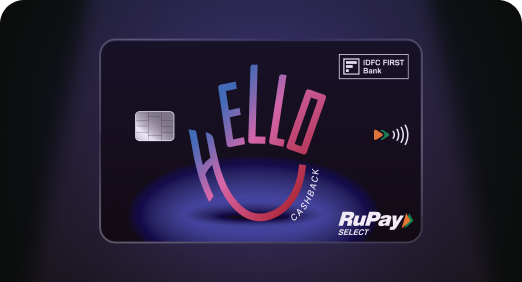
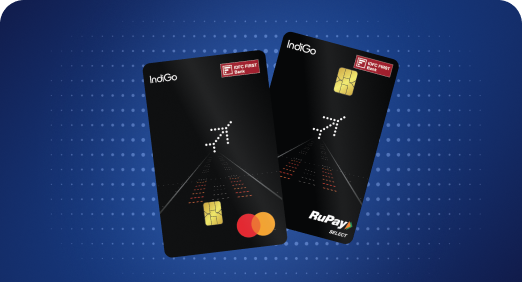

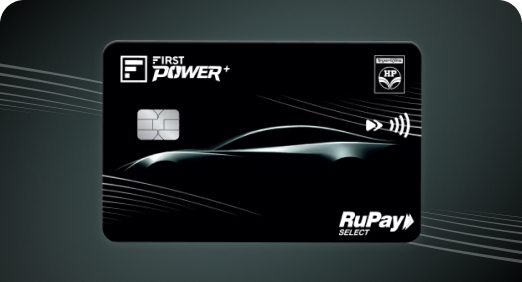
A Card that Powers your Savings & Lifestyle
IDFC FIRST Bank HPCL Credit Card









Most Searched
Earn up to 7% interest on your Savings Account
Open Account Now
Download our app
Get instant help for all your queries in one place
Unlock features, exclusively available
only on the IDFC FIRST Bank app
Trusted by 1.2+ million Indians.


4.8

4.8

Tools & Calculators
Privilege Program



Tools & Calculators

Unlock features, exclusively available
only on the IDFC FIRST Bank app
 Most banks convert a salary account to a savings account within 2 to 3 months if no salary is credited, enabling minimum balance requirements and removing key account benefits.
After the change, fees apply if the balance falls below the bank's Average Monthly Balance.
Letting the bank know early and maintaining the balance helps avoid fees during job changes.
Most banks convert a salary account to a savings account within 2 to 3 months if no salary is credited, enabling minimum balance requirements and removing key account benefits.
After the change, fees apply if the balance falls below the bank's Average Monthly Balance.
Letting the bank know early and maintaining the balance helps avoid fees during job changes.
A salary account is a bank account where your employer regularly deposits your salary. If your salary stops getting credited, your salary account does not stay the same. Within 2 to 3 months, most banks automatically reclassify it as a standard savings account. Your zero-balance waiver ends, minimum balance requirements kick in, and linked benefits may be removed.
Whether you are switching jobs or are on a sabbatical, or are navigating a layoff, knowing what changes and when gives the clarity to act before charges begin.
A salary account exists because of an active employment arrangement between your employer and the bank. When salary credits stop, that arrangement pauses, and the account is monitored against the bank's internal reclassification timeline.
The changes that follow impact more than just your balance:
Zero-balance waiver: Removed when the account status changes
Insurance cover (if opted for or offered): Might lapse depending on your account type and employer agreement
Pre-approved credit: Eligibility may be reduced without an active salary deposit
Debit card benefits: Rewards can be lowered after the account changes
Many account holders find out about these changes only after a fee is charged or they lose their benefits.
Once reclassified, the salary account rules that previously protected you from minimum balance penalties no longer apply. You are now required to maintain an Average Monthly Balance (AMB) as per the bank's standard savings account terms.
If your balance falls below the AMB, the bank charges a fee that is deducted from your account.
Scenario |
Impact |
Salary credited regularly |
Zero-balance waiver active, no AMB charge |
No salary for 2 to 3 months |
Account reclassified to savings |
Balance below AMB post-reclassification |
Non-maintenance charge applied |
Account balance reaches zero |
Account may become dormant over time |
Charges and timelines differ across banks. Always review your account agreement for applicable terms.
Changing a salary account to a savings account is automatic. Many banks inform customers through SMS or email alerts before or after account conversion, depending on registered communication preferences.
You keep your account number, existing balance, and debit card. What changes is the fee structure, the minimum balance obligation, and the removal of salary account benefits.
If you wish to convert your salary account to a normal account, contact your bank to learn more about available account options and applicable terms before charges apply.
Changing jobs, being laid off, or taking a break all carry the same risk: your account rules change quietly while you are focused elsewhere.
Track salary deposits: Watch your account during the first month after leaving a job.
Check linked benefits: Find out if certain benefits, like insurance cover or overdraft access, depend on your salary account status.
Communication alerts: Check alerts received from your bank regarding account conversion or AMB requirements.
Changing from a salary account to a savings account affects more than just your balance requirements. Check all benefit details before the change so you don’t lose any benefits without knowing.
A salary account requires you to have an active job to get a salary. Once salary stops, your account rules change. Knowing the change timeline, maintaining your balance, and handling change yourself help you stay financially ready during job changes.
Most banks change a salary account to a savings account after 2 to 3 months of receiving no salary. The exact timeline depends on the bank, so check your account terms or contact your branch directly.
The salary account rules need the monthly salary to be credited regularly to maintain zero-balance perks and other associated benefits. Once credits stop, the bank automatically converts the account to a standard savings account with minimum balance requirements.
Yes, IDFC FIRST Bank notifies you before your salary account is converted. To make sure you receive these updates without interruption, keep your mobile number and email address updated with the bank. If you wish to convert a salary account to a normal account on your own, contact us directly, and we'll guide you on applicable savings variants to help avoid non-maintenance charges.
The contents of this article/infographic/picture/video are meant solely for information purposes. The contents are generic in nature and for informational purposes only. It is not a substitute for specific advice in your own circumstances. The information is subject to updation, completion, revision, verification and amendment and the same may change materially. The information is not intended for distribution or use by any person in any jurisdiction where such distribution or use would be contrary to law or regulation or would subject IDFC FIRST Bank or its affiliates to any licensing or registration requirements. IDFC FIRST Bank shall not be responsible for any direct/indirect loss or liability incurred by the reader for taking any financial decisions based on the contents and information mentioned. Please consult your financial advisor before making any financial decision.
The features, benefits and offers mentioned in the article are applicable as on the day of publication of this blog and is subject to change without notice. The contents herein are also subject to other product specific terms and conditions and any third party terms and conditions, as applicable. Please refer our website www.idfcfirst.bank.in for latest updates.