









Login to Internet banking
A brand-new experience - smarter, faster, and secured



You gain a dedicated partner committed to helping you reach your full potential and achieve new heights
Know More
BRAVO (Auto Sweep)
Convert the idle funds in your current account into a fixed deposit with the BRAVO feature.
Know More
Zero Forex Markup Current Account
Maximise your savings and boost profitability with our Zero Forex Markup current accounts
Know More




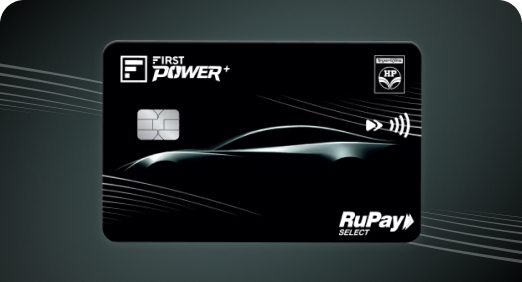
A Card that Powers your Savings & Lifestyle
IDFC FIRST Bank HPCL Credit Card







Most Searched
Earn up to 7% interest on your Savings Account
Open Account Now
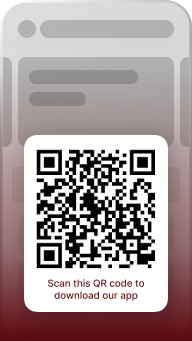
Download our app
Get instant help for all your queries in one place
Unlock features, exclusively available
only on the IDFC FIRST Bank app
Trusted by 1.2+ million Indians.

4.8

4.8

Tools & Calculators
Privilege Program



Tools & Calculators

Unlock features, exclusively available
only on the IDFC FIRST Bank app
Savings Account
 A savings account is suited to individuals with personal savings goals, while a current account is compulsory for businesses.
A savings account offers liquidity, interest earnings on deposited funds, and banking convenience.
A current account provides overdraft facility, direct debits, standing instructions, detailed record-keeping, and a full suite of payment modes.
A savings account is suited to individuals with personal savings goals, while a current account is compulsory for businesses.
A savings account offers liquidity, interest earnings on deposited funds, and banking convenience.
A current account provides overdraft facility, direct debits, standing instructions, detailed record-keeping, and a full suite of payment modes.
A savings account is for individuals who want to grow their money, while a current account is for businesses that need to move their money frequently. People whose primary goal is to save and earn returns should open a savings account, whereas enterprises and companies are required by the Reserve Bank of India (RBI) to conduct transactions through a current account.
Choosing the wrong account type can mean missing out on interest earnings or hitting account restrictions at the wrong time, so understanding the difference between a current account and a savings account clearly is the first step to making the right decision.
Many individuals reach a point where they have surplus income but are unsure where to park it securely while still keeping it accessible. A savings account is a financial instrument that addresses this need. It allows individuals to store funds securely while earning interest on the balance, with the flexibility to deposit or withdraw at any time.
Interest is calculated daily and credited monthly at IDFC FIRST Bank, allowing account holders to benefit from the effect of monthly compounding. IDFC FIRST Bank’s savings accounts can be opened fully online with multiple variants available to suit different financial profiles.
Daily cash inflows, bulk payments, and customer collections make a savings account's transaction limits impractical for businesses. A current account is a transactional deposit account made specifically for businesses, traders, and corporations that conduct a high volume of transactions daily.
A current account does not earn interest on the balance held. It prioritises operational flexibility over wealth accumulation, with a high daily deposit and withdrawal limit and access to services including doorstep banking, cash management services, payment and collection solutions, specialised platforms for business banking, trade forex solutions, short-term loans, and an overdraft facility.
IDFC FIRST Bank offers multiple current account variants to suit different business profiles and requirements.
Knowing the difference between a current account and a savings account is important before deciding which account type to open. The major differences include:
Use case
Savings accounts help individuals save and grow money through interest earnings. Current accounts, by contrast, allow businesses to handle daily activities with ease and come with an overdraft facility to ensure they are never short on cash.
Suitability
A savings account is suited to individuals with a regular source of income or defined savings goals such as a vehicle purchase, a wedding or a vacation. Individuals and organisations that make regular, high-volume money transfers are better served by a current account.
Limits
Financial institutions set a monthly transaction limit on savings accounts. IDFC FIRST Bank Savings Accounts provide a daily purchase limit of up to ₹6 lakh and a daily ATM withdrawal limit of up to ₹2 lakh. Current accounts offer unlimited transactions, though charges apply once the free transaction limit is breached.
The distinction between a current account and a savings account ultimately comes down to the account holder's financial profile and purpose.
Open a savings account if you:
Receive a monthly salary or have a regular personal income
Want to earn interest on your idle balance
Saving towards a personal financial goal
Open a current account if you:
Have a registered business
Process daily payments to suppliers, employees, or service providers
Require an overdraft facility and collection solutions
| Savings Account | Current Account |
Liquidity Highly liquid; funds can be accessed at any time, making it suitable for emergency funds and short-term savings goals |
Liquidity Highest level of liquidity with high daily transaction limits, suited to everyday business payments, collections, and cash withdrawals |
Convenience Online banking , direct deposit, and automatic transfers make saving and fund tracking simple |
Convenience Cheques, debit cards, and online banking provide flexibility in how business transactions are conducted |
|
Up to 7% p.a. with monthly payouts |
Overdraft facility Available on most current accounts |
Security Insured up to ₹5 lakh under DICGC |
Business transactions Supports daily business activity including receiving payments from customers and making payments to suppliers and employees |
Record-keeping Monthly statements and e-mail statements available |
Record-keeping Detailed transaction records to simplify financial management, budgeting, and tax preparation |
Standing instructions Available for recurring personal payments |
Direct debits Supports automated bill payments through direct debits and standing instructions |
Savings account
Fund transfers: NEFT, RTGS, IMPS, and UPI
Bill payments: Utility bills payments, online purchases
SMS alerts: Transaction notifications
ATM access: ATM access pan India
Current account
Online banking: Internet and mobile banking
Payment /collection solutions: UPI, QR, Bulk pay, business banking solutions
Trade forex solutions: Forex within the banking platform
Doorstep banking: Pickup and delivery for business convenience
Both accounts can be opened through the IDFC FIRST Bank website.
The right account type depends on whether the primary need is personal wealth building or business transaction management. A wide range of savings account variants serve individuals a current account serves enterprises. Evaluating factors such as transaction frequency, minimum balance obligations, and the need for an overdraft facility will help in making an informed choice.
A savings account is made for individuals to store money and earn interest. A current account is designed for businesses to manage high-frequency daily transactions with overdraft facilities. The current account and savings account difference is primarily one of purpose: personal wealth building vs business cash flow management.
A savings account is the appropriate choice for salary credit. It earns interest on the deposited balance and offers a daily ATM withdrawal and other on essential services.
Current accounts do not earn any interest on the balance held. The interest advantage lies with savings accounts.
The contents of this article/infographic/picture/video are meant solely for information purposes. The contents are generic in nature and for informational purposes only. It is not a substitute for specific advice in your own circumstances. The information is subject to updation, completion, revision, verification and amendment and the same may change materially. The information is not intended for distribution or use by any person in any jurisdiction where such distribution or use would be contrary to law or regulation or would subject IDFC FIRST Bank or its affiliates to any licensing or registration requirements. IDFC FIRST Bank shall not be responsible for any direct/indirect loss or liability incurred by the reader for taking any financial decisions based on the contents and information mentioned. Please consult your financial advisor before making any financial decision.
The features, benefits and offers mentioned in the article are applicable as on the day of publication of this blog and is subject to change without notice. The contents herein are also subject to other product specific terms and conditions and any third party terms and conditions, as applicable. Please refer our website www.idfcfirst.bank.in for latest updates.


You will earn