













Login to Internet banking
A brand-new experience - smarter, faster, and secured


Introducing the First-in-industry IDFC FIRST Bank's Super Account
Request a Callback
You gain a dedicated partner committed to helping you reach your full potential and achieve new heights
Know More
BRAVO (Auto Sweep)
Convert the idle funds in your current account into a fixed deposit with the BRAVO feature.
Know More
Zero Forex Markup Current Account
Maximise your savings and boost profitability with our Zero Forex Markup current accounts
Know More
Make more than one online payment in just a few clicks with IDFC FIRST Bank Bulk Payments
Know More






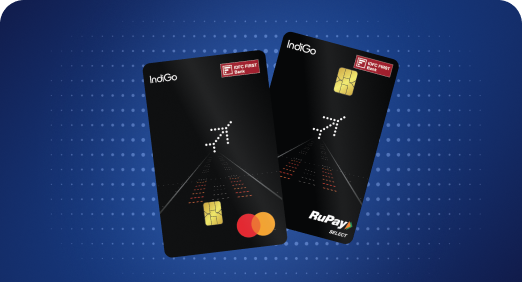

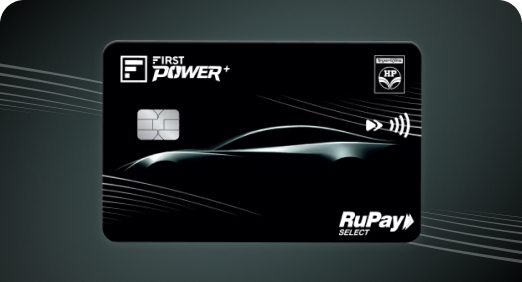
A Card that Powers your Savings & Lifestyle
IDFC FIRST Bank HPCL Credit Card





Most Searched

Earn up to 6.50% interest on your Savings Account
Open Account Now
Download our app
Get instant help for all your queries in one place
Unlock features, exclusively available
only on the IDFC FIRST Bank app
Trusted by 1.2+ million Indians.


4.8

4.8

Tools & Calculators
Privilege Program




Unlock features, exclusively available
only on the IDFC FIRST Bank app
Savings Account
 In India, savings accounts and fixed deposits are the two most common savings plans, and they differ in many ways.
A savings account gives you maximum liquidity, while a fixed deposit lets you park money safely and earn good interest.
An FD can also help you get an emergency loan.
In India, savings accounts and fixed deposits are the two most common savings plans, and they differ in many ways.
A savings account gives you maximum liquidity, while a fixed deposit lets you park money safely and earn good interest.
An FD can also help you get an emergency loan.
Saving your money is as crucial as earning it. You need to save money not only for your future financial goals but also for any unforeseen financial emergencies. However, saving doesn’t mean stashing a bundle of currency notes under your mattress or inside your almirah. This way, you would be saving your money – but it will never grow.
Your aim should be to park your money in instruments where you can get decent returns or interest. The two most common savings instruments in India are a savings account and a fixed deposit account. You can park your money in either and earn interest according to a predetermined rate.
For ease of understanding, we have compared savings accounts vs fixed deposit accounts in detail in this article. We will also tell you the features and benefits of both. So, if you are confused between these two financial instruments, read on.
A savings account is the most basic account that you can open with a bank or a financial institution. The purpose of a savings bank account is to keep your money safe with the bank. A savings bank account allows maximum liquidity as you can deposit or withdraw from it anytime, anywhere.
Keeping your money in a savings account is as good as having cash in your hand but stored safely. Moreover, you also earn interest on your money kept in a savings bank account. However, since a savings account offers high liquidity, the interest rates are usually low. Depending on the bank, interest on a savings account can be 3%-6%.
Here are the salient features of a savings bank account:
A Fixed Deposit or FD is another savings instrument offered by banks, post offices, and non-banking financial companies. As the name suggests, it allows you to deposit a specific amount for a fixed period. The interest rates are usually higher than what savings bank accounts offer and remain fixed throughout the FD tenure. Currently, the fixed deposit interest rates range from 3% to 7.25%, depending on the bank or financial institution.
Here are the salient features of an FD:
The basic difference between a savings account and a fixed deposit account must be clear to you by now. In case you still have doubts, let’s evaluate the differences between these two financial instruments based on various parameters:
The main thing an investor looks at before investing money in any financial instrument is the rate of interest they will be getting.
Another factor investors look at while choosing an investment avenue is the liquidity they will be getting. This is where savings accounts score over fixed deposits as they offer maximum liquidity. As a savings bank account holder, you can deposit or withdraw from your account anytime. You can even pay directly from your savings account to merchants using your debit card, netbanking, or UPI facility.
Taxation rules are different for a savings account and a fixed deposit account. While you won’t get any tax benefits by keeping your money in a savings bank account, you can claim tax deductions of up to Rs 1.5 lakh under Section 80C of the Income Tax Act 1961 by investing in a tax-saving fixed deposit.
An FD can help you borrow an emergency loan with a lender. You can keep your fixed deposit as collateral and borrow a loan against it to tackle a sudden financial emergency. Several lenders in India provide loans against FDs. However, no such facility is available for savings account holders.
If you are a senior citizen, i.e., aged 60 or above, you can avail of special benefits by investing in an FD. Almost all banks and financial institutions offer higher FD interest rates for senior citizens. No such luxuries are available to savings bank account holders. However, a few banks, such as IDFC FIRST Bank, offer special privileges for senior citizens in their savings bank accounts.
Fixed deposits usually come with lock-in periods. You are not allowed to withdraw your money during this time. So, if you want to save some money that you would not require in the near future, parking it in an FD is a better option. On the other hand, there is no lock-in period in the case of savings bank accounts.
Fixed deposits are a better option if you want to park your money for fixed tenures and earn higher interest. You can choose a suitable tenure between 7 days and 10 years and get the best interest rates on your FD investments. At present, with an IDFC FIRST Bank Fixed Deposit, you can earn up to 7.50% (for Senior Citizens) per annum interest on your idle funds. Kindly note that the FD interest rates are subject to change.
On the other hand, savings accounts are meant to keep your money safe with a bank and allow you to enjoy high liquidity. But bear in mind that they offer the lowest interest rates compared to other savings instruments.
The contents of this article/infographic/picture/video are meant solely for information purposes. The contents are generic in nature and for informational purposes only. It is not a substitute for specific advice in your own circumstances. The information is subject to updation, completion, revision, verification and amendment and the same may change materially. The information is not intended for distribution or use by any person in any jurisdiction where such distribution or use would be contrary to law or regulation or would subject IDFC FIRST Bank or its affiliates to any licensing or registration requirements. IDFC FIRST Bank shall not be responsible for any direct/indirect loss or liability incurred by the reader for taking any financial decisions based on the contents and information mentioned. Please consult your financial advisor before making any financial decision.
The features, benefits and offers mentioned in the article are applicable as on the day of publication of this blog and is subject to change without notice. The contents herein are also subject to other product specific terms and conditions and any third party terms and conditions, as applicable. Please refer our website www.idfcfirst.bank.in for latest updates.


You will earn