







Login to Internet banking
A brand-new experience - smarter, faster, and secured


BRAVO (Auto Sweep)
Convert the idle funds in your current account into a fixed deposit with the BRAVO feature.
Know More

Zero Forex Markup Current Account
Maximise your savings and boost profitability with our Zero Forex Markup current accounts
Know More
BRAVO (Auto Sweep)
Convert the idle funds in your current account into a fixed deposit with the BRAVO feature.
Know More
You gain a dedicated partner committed to helping you reach your full potential and achieve new heights
Know More





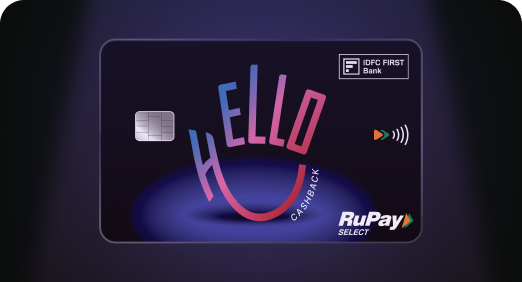

Enjoy Zero Forex on all IDFC FIRST Bank Credit Cards
Save more on all international spends
Know More
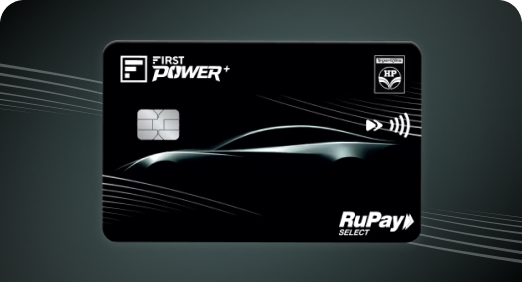
A Card that Powers your Savings & Lifestyle
IDFC FIRST Bank HPCL Credit Card








Most Searched
Earn up to 7% interest on your Savings Account
Open Account Now
Download our app
Get instant help for all your queries in one place
Unlock features, exclusively available
only on the IDFC FIRST Bank app
Trusted by 1.2+ million Indians.


4.8

4.8

Tools & Calculators
Privilege Program



Tools & Calculators

Unlock features, exclusively available
only on the IDFC FIRST Bank app
Savings Account
 Look beyond the interest rate alone. AMB, charges and UPI limits shape the real cost of a student's banking.
Match the account to spending patterns. A zero AMB account suits irregular income, while a higher-AMB variant pays off if the balance can be maintained comfortably.
Compare digital features, ATM access and debit card benefits before opening a savings account as a student.
The best savings account for students balances an average monthly balance (AMB) that can actually be maintained, transparent charges, and reliable UPI-based digital payments for everyday spending.
Most students juggle irregular income from pocket money, part-time work or scholarships, so an account with a high advertised interest rate but a steep AMB requirement can end up costing more in penalties than it earns in interest. This guide covers what to check, how spending habits should shape the decision, and the common mistakes to avoid.
Before comparing individual banks, check these basics on any student account:
AMB requirement - How much balance must be maintained, and whether it can be zero for a dedicated student or zero balance account.
Charges and penalties - Fees such as AMB shortfall charges, ATM usage caps and debit card issuance costs.
Digital and UPI - Whether the account supports instant UPI transfers, a mobile app and Video KYC account opening.
Debit card benefits - Insurance cover, discounts and daily transaction limits attached to the card
Your monthly spending pattern should guide the account you pick. If your expenses are mostly UPI-based, small and frequent, such as ₹200 to ₹2,000 for food, transport or subscriptions, a zero AMB account removes the pressure of putting in funds you would rather spend.
If you receive a lump sum each semester, for tuition top-ups or hostel deposits, an account with a ₹10,000 to ₹25,000 AMB may suit you better, since maintaining the balance is easier and gives you better debit card benefits. Track your average monthly balance over 2 to 3 months before deciding, rather than estimating it.
Convenience and cost often pull in different directions when you're comparing accounts. A zero AMB account removes penalty risk entirely, though it may come with fewer debit card perks, while a higher-AMB account usually pays a better interest rate and provides better card benefits if you can consistently maintain the balance.
IDFC FIRST Bank offers both types of accounts. The zero-AMB Quantum+ Savings Account for penalty-free banking, and the ₹10,000 or ₹25,000 AMB Savings Account variants. Both earn up to 7% p.a., credited monthly instead of the quarterly cycle most banks follow, so even a modest balance starts compounding sooner. Weigh what you can actually maintain, rather than what looks best on paper.
Before opening an account, get clear answers to these questions:
What is the minimum balance requirement, and does it change for a student or zero balance variant?
At what balance does the advertised top rate actually apply?
What is the daily UPI transfer limit, and is UPI free to use?
Can it be opened fully online through Video KYC, without a branch visit?
What perks come with the card?
Here are some common errors that students make when choosing a savings account for themselves that can cost more than a few hundred rupees over the year:
Chasing headline rates - Picking a high-yield savings account for students based only on the advertised top rate. Most banks pay their top slab rate only above a certain balance, while the lower balances most students maintain earn a more modest base rate, so the headline number rarely reflects what a student would actually earn
Ignoring AMB penalties - Underestimating how a shortfall charge adds up over months of low balance.
Skipping fine print - Not checking UPI transfer limits, ATM withdrawal caps or debit card annual fees or any other charges.
Not looking at personal fit - Opening an account just because it's popular or widely used, without matching it to your own spending habits.
Choosing the best savings account for students comes down to matching AMB, charges and UPI features to one’s actual spending and saving patterns. Zero AMB accounts remove penalty risk for students with irregular income, while accounts with a maintainable AMB, such as the IDFC FIRST Bank Savings Account's ₹10,000 or ₹25,000 variants, offer attractive interest rates and better debit card benefits. Comparing the slab at which the top rate applies, the UPI limits and how quickly an account can be opened online helps in making the right choice.
The most important factors a student should look at when opening their first savings account are the AMB requirement, charges for falling short of it, UPI transfer limits and how easily the account can be opened online. What interest rate applies to your balance slab matters too.
Start by comparing accounts against your actual monthly balance and spending patterns, not just the bank’s advertised benefits. Shortlist two or three accounts, check the fine print on charges and UPI limits, and pick the one that fits your spending habits rather than the one with the flashiest features or the one which is widely used.
Common mistakes to avoid include choosing an account purely for its advertised interest rate, ignoring how AMB shortfall charges are calculated, and skipping details like UPI limits or debit card fees or other charges. Comparing accounts on interest rate alone, without checking these factors, is one of the biggest errors students make.
The contents of this article/infographic/picture/video are meant solely for information purposes. The contents are generic in nature and for informational purposes only. It is not a substitute for specific advice in your own circumstances. The information is subject to updation, completion, revision, verification and amendment and the same may change materially. The information is not intended for distribution or use by any person in any jurisdiction where such distribution or use would be contrary to law or regulation or would subject IDFC FIRST Bank or its affiliates to any licensing or registration requirements. IDFC FIRST Bank shall not be responsible for any direct/indirect loss or liability incurred by the reader for taking any financial decisions based on the contents and information mentioned. Please consult your financial advisor before making any financial decision.
The features, benefits and offers mentioned in the article are applicable as on the day of publication of this blog and is subject to change without notice. The contents herein are also subject to other product specific terms and conditions and any third party terms and conditions, as applicable. Please refer our website www.idfcfirst.bank.in for latest updates.


You will earn