









Login to Internet banking
A brand-new experience - smarter, faster, and secured


BRAVO (Auto Sweep)
Convert the idle funds in your current account into a fixed deposit with the BRAVO feature.
Know More

Zero Forex Markup Current Account
Maximise your savings and boost profitability with our Zero Forex Markup current accounts
Know More
BRAVO (Auto Sweep)
Convert the idle funds in your current account into a fixed deposit with the BRAVO feature.
Know More
You gain a dedicated partner committed to helping you reach your full potential and achieve new heights
Know More



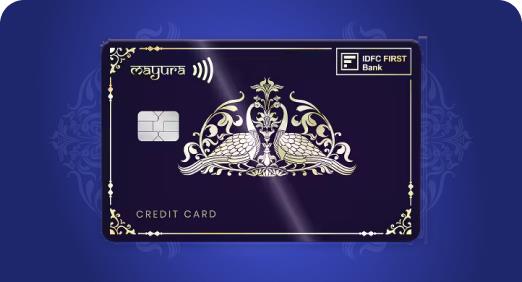

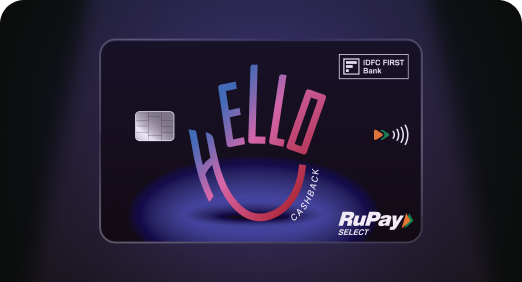

Enjoy Zero Forex on all IDFC FIRST Bank Credit Cards
Save more on all international spends
Know More
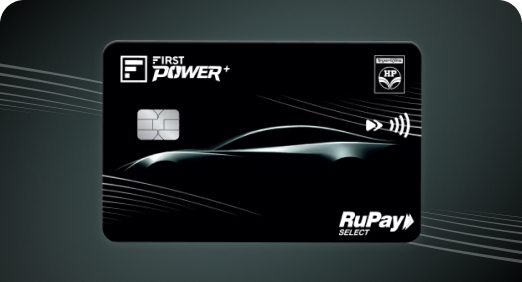
A Card that Powers your Savings & Lifestyle
IDFC FIRST Bank HPCL Credit Card









Most Searched
Earn up to 7% interest on your Savings Account
Open Account Now
Download our app
Get instant help for all your queries in one place
Unlock features, exclusively available
only on the IDFC FIRST Bank app
Trusted by 1.2+ million Indians.


4.8

4.8

Tools & Calculators
Privilege Program



Tools & Calculators

Unlock features, exclusively available
only on the IDFC FIRST Bank app
Savings Account
 A Merchant Discount Rate (MDR) of 0.4% will apply to most merchant UPI payments above ₹2,000, while P2P transfers stay free.
As announced on October 13 by the NPCI, the rollout which ws planned for October 15 has been postponed until immediately after Diwali and a revised date will be notified later.
UPI transaction limits are generally capped at ₹1 lakh per day for most payments, with higher limits allowed for categories like insurance and capital markets.
A Merchant Discount Rate (MDR) of 0.4% will apply to most merchant UPI payments above ₹2,000, while P2P transfers stay free.
As announced on October 13 by the NPCI, the rollout which ws planned for October 15 has been postponed until immediately after Diwali and a revised date will be notified later.
UPI transaction limits are generally capped at ₹1 lakh per day for most payments, with higher limits allowed for categories like insurance and capital markets.
UPI has become the most common way to send money and pay for everyday purchases in India, linking bank accounts through a mobile app and a UPI ID. It accounts for the largest share of digital retail payments in the country, thanks to instant, round-the-clock transfers. The latest development is a set of new UPI rules introducing a Merchant Discount Rate on select merchant payments from October 2026. This blog covers how UPI works, its uses, the latest charges, limits and safety practices.
UPI, or Unified Payments Interface, allows instant transfers between bank accounts using a mobile phone, without needing the receiver's account number or IFSC code. A transaction runs on a UPI ID, entered directly or scanned as a QR code, and is authorised with a UPI PIN. UPI supports two kinds of transactions: person-to-person (P2P), where money moves between individuals, and person-to-merchant (P2M), where a payment is made to a business. Both use the same UPI ID and PIN mechanism, though the rules for each differ, as covered below.
UPI has moved beyond simple money transfers and now covers most everyday payment needs.
Money transfers – Send or receive money instantly with a UPI ID, mobile number or QR code.
Merchant payments – Pay at shops, restaurants and online stores by scanning a QR code.
Bill payments – Pay electricity, water, gas and mobile bills through a UPI app.
Scheduled payments – Set up UPI AutoPay for subscriptions, SIPs and insurance premiums.
Other services – Book tickets, invest in mutual funds, apply for IPOs and pay taxes.
Under the new UPI rules announced by the Ministry of Finance, a Merchant Discount Rate (MDR) of 0.4% will apply to select person-to-merchant (P2M) UPI payments above ₹2,000. Previously planned for October 15, the rollout has been postponed untill after Diwali as notified by the NPCI on October 13. The revised implementation date will be announced separately. This is the first fee on UPI payments since MDR on P2M transactions was removed in 2020. The charge is paid by the merchant's bank, rather than added to what a customer pays.
The table below sums up who this affects.
Transaction type |
MDR |
Who pays |
Person-to-person (P2P) transfers |
None |
Not applicable |
Merchant payments up to ₹2,000 |
None |
Not applicable |
Small merchants (up to ₹1 lakh/month via UPI QR) |
None |
Not applicable |
Standard merchant payments above ₹2,000 |
0.4%, capped at ₹300 per transaction |
Merchant |
Railways, fuel, telecom, insurance above ₹2,000 |
Flat ₹5 per transaction |
Merchant |
Capital market transactions above ₹2,000 |
0.02%, capped at ₹300 |
Broker or platform |
Payments up to ₹2,000 make up most of India's merchant UPI volume and stay free of this charge. Small merchants earning up to ₹1 lakh a month via UPI QR codes are exempt too. Under the current rules, merchants are not permitted to pass the MDR on to customers as a separate charge, and the government has said it will monitor compliance in this area.

Along with pricing changes, it helps to know the caps that apply to how much you can move through UPI.
Daily and per-transaction limit – The standard UPI limit per day is ₹1 lakh across most P2P and P2M payments, capped at around 20 transactions a day, as set by NPCI.
Higher limits for certain categories – Insurance, capital markets, travel, tax payments, hospitals and education can go up to ₹5 lakh per transaction, with a daily total of up to ₹10 lakh.
No fixed monthly cap – NPCI does not prescribe a separate UPI transaction limit per month for personal transfers; limits work on a daily and per-transaction basis instead.
Limits vary by bank – Your bank may set a lower UPI limit per day than the NPCI ceiling, and new users are usually capped at ₹5,000 for the first 24 hours.
Despite the new charges for merchants, UPI stays free for individual users in almost every situation.
P2P payments – Sending money to family or friends carries no charge, whatever the amount, and this has not changed.
Merchant payments up to ₹2,000 – Paying a shop, restaurant or online store ₹2,000 or less remains free.
MDR versus a customer fee – The MDR is deducted from the merchant's settlement; under the current rules, merchants are not permitted to bill it to the customer.
A quick example – On a ₹3,000 purchase, the merchant pays ₹12 as MDR, while the customer's payment stays unchanged.
A few habits go a long way in keeping your UPI transactions secure.
Verify payment details – Check the payee name and amount before entering your UPI PIN.
Never share your PIN – Your UPI PIN and OTP are meant only for you; no bank or app will ever ask for them.
Avoid unknown requests – Be cautious of unexpected collect requests or payment links and decline anything unfamiliar.
Report unauthorised transactions – If you notice a transaction you did not make, report it to your bank and UPI app immediately.
Every UPI transaction is ultimately linked to a bank account, so the account behind your UPI ID matters as much as the app you use. IDFC FIRST Bank’s Savings Account offers up to 7% p.a. interest credited monthly, along with easy UPI transfers and bill payments. All of this can be managed through the IDFC FIRST Bank mobile banking app, rated India's number 1 mobile banking app, with 1.74 million+ users and ratings of 4.9 on Google Play and 4.8 on the Apple App Store, alongside a 5-minute digital account opening process.
UPI continues to be a convenient way to send money and pay for purchases, and the changes mainly affect merchants rather than customers. The 0.4% MDR applies only to standard merchant payments above ₹2,000, while P2P transfers and small-merchant UPI QR transactions remain free. NPCI's daily and per-transaction caps still apply, though banks may set their own lower limits, with higher NPCI limits for categories such as insurance and education. A few basic safety habits, paired with the right Savings Account, help make the most of UPI.
Yes, UPI remains free for P2P payments and merchant payments up to ₹2,000, while the new MDR is paid by eligible merchants.
The standard UPI limit is ₹1 lakh per day across most P2P and P2M payments, although banks may set lower limits.
Yes, UPI enables instant bank-account transfers using a UPI ID, mobile number or QR code without entering the receiver’s account number or IFSC code.
The contents of this article/infographic/picture/video are meant solely for information purposes. The contents are generic in nature and for informational purposes only. It is not a substitute for specific advice in your own circumstances. The information is subject to updation, completion, revision, verification and amendment and the same may change materially. The information is not intended for distribution or use by any person in any jurisdiction where such distribution or use would be contrary to law or regulation or would subject IDFC FIRST Bank or its affiliates to any licensing or registration requirements. IDFC FIRST Bank shall not be responsible for any direct/indirect loss or liability incurred by the reader for taking any financial decisions based on the contents and information mentioned. Please consult your financial advisor before making any financial decision.
The features, benefits and offers mentioned in the article are applicable as on the day of publication of this blog and is subject to change without notice. The contents herein are also subject to other product specific terms and conditions and any third party terms and conditions, as applicable. Please refer our website www.idfcfirst.bank.in for latest updates.


You will earn