









Login to Internet banking
A brand-new experience - smarter, faster, and secured


You gain a dedicated partner committed to helping you reach your full potential and achieve new heights
Know More
BRAVO (Auto Sweep)
Convert the idle funds in your current account into a fixed deposit with the BRAVO feature.
Know More
Zero Forex Markup Current Account
Maximise your savings and boost profitability with our Zero Forex Markup current accounts
Know More



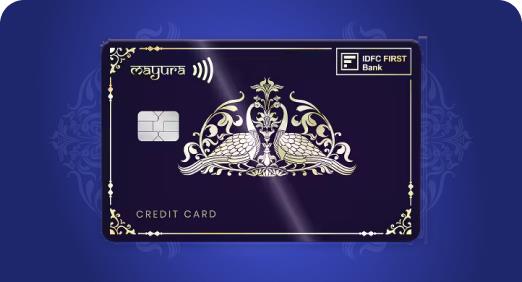

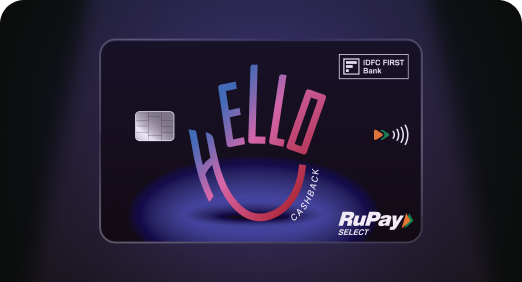
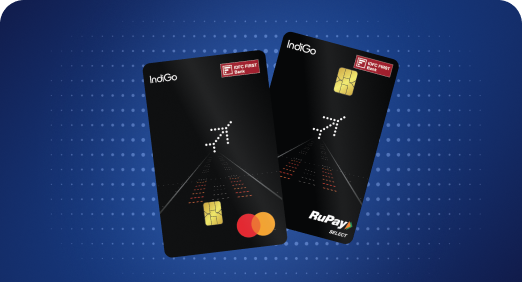
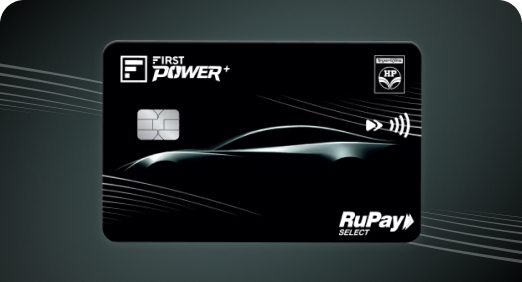
A Card that Powers your Savings & Lifestyle
IDFC FIRST Bank HPCL Credit Card









Most Searched
Earn up to 7% interest on your Savings Account
Open Account Now
Download our app
Get instant help for all your queries in one place
Unlock features, exclusively available
only on the IDFC FIRST Bank app
Trusted by 1.2+ million Indians.


4.8

4.8

Tools & Calculators
Privilege Program



Tools & Calculators

Unlock features, exclusively available
only on the IDFC FIRST Bank app
Personal Loan
 Consolidating credit card dues into one loan converts several high-cost, revolving balances into a single fixed EMI with a clear payoff date
The actual saving depends on comparing interest, fees, tenure and foreclosure terms, not just the advertised rate
Clearing card balances through consolidation lowers the credit utilisation ratio, which can support the credit score over time
Consolidating credit card dues into one loan converts several high-cost, revolving balances into a single fixed EMI with a clear payoff date
The actual saving depends on comparing interest, fees, tenure and foreclosure terms, not just the advertised rate
Clearing card balances through consolidation lowers the credit utilisation ratio, which can support the credit score over time
Credit card dues in India commonly carry annual interest between 30% and 45%, while a personal loan taken to clear these dues can bring the personal loan interest rate down considerably, depending on the borrower’s income and credit score.
Moving several card balances into one loan converts revolving, compounding debt into a single fixed instalment with a set end date, since minimum-due payments barely reduce the principal while a fixed EMI reduces the balance every month.
Yes, for borrowers holding balances across three or more cards, a low-interest rate personal loan can convert scattered, high-cost dues into one predictable obligation with a clear payoff date.
Whether this saves money depends on three factors:
When these factors align, consolidation lowers total interest paid. When fees are high or the tenure is stretched too long, the saving narrows.
Multiple card balances: Dues split across three or more cards with different due dates become harder to track and easier to miss
High revolving rates: Card interest above 30% p.a. makes a fixed-rate low-interest loan an affordable alternative
Minimum payment cycle: Paying only the minimum due each month keeps the principal nearly unchanged for years
Stable repayment capacity: A steady monthly income that supports a fixed EMI turns variable card dues into one predictable outflow
Debt consolidation follows a clear sequence as shown below. Before applying, check the personal loan interest rate on offer against the current card rates from multiple lenders to confirm the actual saving.
Cards that have been paid off are best kept only for spending going forward, not for carrying fresh balances, since running up new dues on a cleared card works against the purpose of consolidation.
Single monthly EMI: Multiple card dues become one fixed payment each month
Lower interest outgo: Fixed low-interest loan rates usually sit below revolving card rates
Fixed repayment timeline: A set tenure gives a clear payoff date, unlike an open-ended card balance
Better credit utilisation: Clearing card dues lowers the credit utilisation ratio, improving future borrowing eligibility
Simpler tracking: One due date replaces several card statements and payment cycles which is easier to track
Interest calculation method: A reducing balance method charges interest only on the outstanding amount, which usually costs less over the tenure than a flat rate on the original principal
Associated fees: Processing fees, late payment penalties, bounce charges and documentation charges all add to the borrowing cost, so don’t just look at the headline rate. Read the schedule of charges available on most lenders' websites before applying
Tenure options: Indian lenders commonly offer tenures in the 9 to 60-month range. A longer tenure lowers the EMI but raises the total interest paid and a shorter tenure does the exact opposite
Foreclosure and prepayment terms: Some lenders charge a fee to close the loan early, while others allow it at no cost, which affects potential savings later so always check these terms before applying
Disbursal timeline: Most digital lenders now disburse funds within minutes to a day or two of approval
IDFC FIRST Bank's FIRSTmoney personal loan charges interest on a reducing balance from 9.99% p.a., carries zero foreclosure charges, and offers tenure options from 9 to 60 months with a fully digital application process and disbursal in as little as 10 minutes after approval.
The figures below are illustrative, based on reducing balance calculation method and interest rate starting at 9.99% p.a. Actual EMI and interest depend on the chosen lender and tenure, and the borrower's credit profile.
| Card debt consolidated | Loan tenure | Rate (reducing) | Approx. EMI | Approx. total interest paid |
| ₹2,00,000 | 36 months | 9.99% p.a. | ₹6,452 | ₹32,272 |
| ₹5,00,000 | 48 months | 9.99% p.a. | ₹12,679 | ₹1,08,592 |
| ₹8,00,000 | 60 months | 9.99% p.a. | ₹16,994 | ₹2,19,640 |
Credit card interest in India commonly runs between 30% and 45% p.a. on the revolving balance. Paying only the minimum due on these amounts extends repayment over several years and raises the interest cost beyond the figures shown above, since the principal reduces at a much slower pace on a card than on a fixed-tenure loan.
Ignoring fees: Charges such as processing, late payment and foreclosure fees add up beyond the headline rate
Choosing the longest tenure: A longer tenure lowers the EMI but raises the total interest paid
Reusing cleared cards: Running up new balances on paid-off cards undoes the benefit of consolidation
Skipping loan comparison: Not comparing lenders can mean missing better terms elsewhere
Overlooking foreclosure terms: Some loans charge a fee for early closure, which reduces the potential saving
Consolidating credit card debt using a low-interest personal loan works best when the full cost is compared across interest, fees, tenure and foreclosure terms, not just the advertised rate. A low-interest rate personal loan, paired with disciplined repayment and no fresh card spending, can turn scattered high-cost dues into one lower-cost obligation with a fixed end date.
Most lenders in India offer competitive terms to borrowers with credit scores ranging from 700 to 750, with scores above 750 usually unlocking the lowest rates. Approval also depends on income, existing obligations and repayment history.
A personal loan pays off cards directly and converts the dues into one fixed EMI, while a card balance transfer only shifts the debt to another card, often with a promotional period followed by a higher rate. For dues spread across multiple cards, a personal loan gives a simpler route to one fixed obligation.
Yes, provided the loan carries no foreclosure charges like IDFC FIRST Bank's FIRSTmoney personal loan, letting borrowers close the loan early without a penalty once surplus funds are available.
The contents of this article/infographic/picture/video are meant solely for information purposes. The contents are generic in nature and for informational purposes only. It is not a substitute for specific advice in your own circumstances. The information is subject to updation, completion, revision, verification and amendment and the same may change materially. The information is not intended for distribution or use by any person in any jurisdiction where such distribution or use would be contrary to law or regulation or would subject IDFC FIRST Bank or its affiliates to any licensing or registration requirements. IDFC FIRST Bank shall not be responsible for any direct/indirect loss or liability incurred by the reader for taking any financial decisions based on the contents and information mentioned. Please consult your financial advisor before making any financial decision.
The features, benefits and offers mentioned in the article are applicable as on the day of publication of this blog and is subject to change without notice. The contents herein are also subject to other product specific terms and conditions and any third party terms and conditions, as applicable. Please refer our website www.idfcfirst.bank.in for latest updates.