









Login to Internet banking
A brand-new experience - smarter, faster, and secured



You gain a dedicated partner committed to helping you reach your full potential and achieve new heights
Know More
BRAVO (Auto Sweep)
Convert the idle funds in your current account into a fixed deposit with the BRAVO feature.
Know More
Zero Forex Markup Current Account
Maximise your savings and boost profitability with our Zero Forex Markup current accounts
Know More





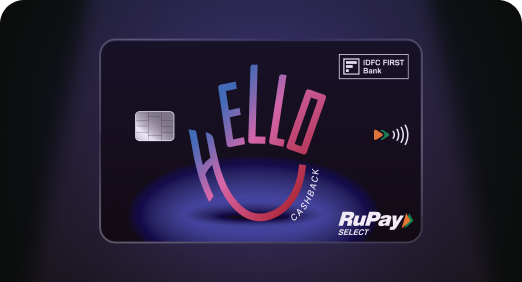
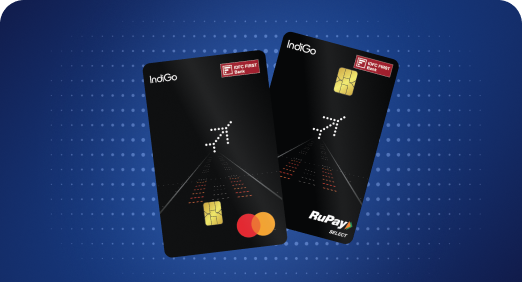

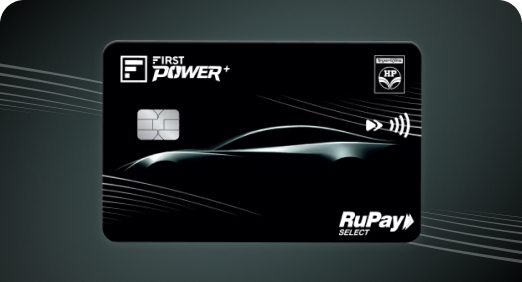
A Card that Powers your Savings & Lifestyle
IDFC FIRST Bank HPCL Credit Card








Most Searched
Earn up to 6.50% interest on your Savings Account
Open Account Now
Download our app
Get instant help for all your queries in one place
Unlock features, exclusively available
only on the IDFC FIRST Bank app
Trusted by 1.2+ million Indians.

4.8

4.8

Tools & Calculators
Privilege Program



Tools & Calculators

Unlock features, exclusively available
only on the IDFC FIRST Bank app
Savings Account
 Individuals can easily manage shared finances through a joint savings account with complete transparency.
Depending on your preference of operating a joint savings account, you can choose from operation modes like ‘Either or Survivor’ or ‘Jointly’.
Opening a joint savings account with IDFC FIRST Bank ensures a seamless experience with digital convenience, and competitive interest rates.
Individuals can easily manage shared finances through a joint savings account with complete transparency.
Depending on your preference of operating a joint savings account, you can choose from operation modes like ‘Either or Survivor’ or ‘Jointly’.
Opening a joint savings account with IDFC FIRST Bank ensures a seamless experience with digital convenience, and competitive interest rates.
Managing money as a team, whether with a parent, spouse, or business partner, can seem difficult when the right tools are not used. A joint savings account is a practical way to combine funds, track expenses, and achieve mutual goals. A joint account may make financial responsibilities clear and may help build trust between the account holders.
If you want to open a joint account, you can rely on IDFC FIRST Bank. This will ensure a hassle-free, smooth experience with digital solutions, with minimal paperwork.
A joint savings account functions like a regular savings account. The only difference is that a single account is held by two more people. It helps account holders manage combined expenses, maintain transparency when managing financial obligations and track contributions.
In India, a joint savings account may be classified under:
Joint
Former or Survivor
Either or Survivor
Anyone or survivor
Anyone aged 18 and above can open a joint savings account. All account holders must complete the Know Your Customer (KYC) process and submit valid ID and address proofs. Based on what mode of operation is chosen between ‘Either or Survivor’ and ‘Jointly’, fund access may vary for each holder.
To open a joint savings account India, all account holders must provide primary documents such as the PAN card along with passport-size photos. For address and identity verification, some of the following documents may be necessary:
Aadhaar Card
Passport
Driver’s License
Step 1: Choose the Right Bank
It can be wise to consider opening a joint account with a bank like IDFC FIRST Bank. Individuals may access beneficial features such as 24/7 net banking, individual debit cards, a good savings account interest rate, and responsive customer support.
Step 2: select the type of Joint Account
You can finalise the type of account. Modes such as joint, former or survivor, either or survivor and anyone or survivor are commonly chosen.
Step 3: Gather the required documents
Typically, the bank requires documents such as the PAN Card, passport-size photos, and identity and address proof, such as an Aadhaar card, passport, or driving license.
Step 4: Apply online or visit the nearest branch
You can open a joint bank account at IDFC FIRST Bank by visiting the nearest IDFC FIRST Bank branch. A representative will offer guidance on the application process and paperwork. All account holders must be present for the verification and signature.
Step 5: Activate and manage your account digitally
Once the account is active, finances can be managed online through internet banking or using the IDFC FIRST Bank mobile banking app. Funds can be transferred, auto-debits can be set up, investments can be initiated, online purchases can be made, and much more.
A joint savings account offers the following benefits:
Transparency:
Each account holder can monitor how the money is spent. This helps minimise friction.
Better Planning:
Account holders can save money together for future targets such as holidays or emergencies.
Cost Efficiency:
You can maintain a joint account, as it may cost less than multiple individual accounts.
When individuals manage their finances through a joint account, filing taxes can be easier with a joint account, thanks to clear records of combined expenses, income, and deductions.
To manage a joint account responsibly, account holders may take note of some best practices:
Establish clear contribution rules, such as if you want a 50/50 split, prefer a proportional contribution, or wish to pool your entire earnings.
Set goals to save together, such as building an emergency fund within a set time frame.
Try to divide payments and schedule periodic check-ins.
Choose a mode of account operation that suits all account holders’ financial needs.
It may be wise to choose IDFC FIRST Bank, as the documents required for savings accounts are limited. You may also benefit from complete transparency, high interest rates, and 24/7 customer support. You also get access to digital solutions that can make daily banking, bill payments, fund transfers and more, simple.
If you have been wanting to easily open a savings account, you can do so from the comfort of your home. You may also visit the nearest IDFC FIRST Bank branch to complete the process.
Opening a joint savings account can be financially smart if shared responsibilities must be managed. These accounts encourage mutual planning, simplify transactions, and provide financial clarity. When you choose a reliable partner like IDFC FIRST Bank, you may experience digital advantages that may make your banking journey stress-free.
Any two or more individuals aged 18 years and above can open a joint savings account after completing KYC.
PAN card, passport-size photographs, and valid identity and address proof such as Aadhaar, Passport, or Driving Licence.
A joint savings account helps manage shared expenses, improve transparency, and save towards common financial goals.
The features, benefits and offers mentioned in the article are applicable as on the day of publication of this blog and is subject to change without notice. The contents herein are also subject to other product specific terms and conditions and any third party terms and conditions, as applicable. Please refer our website www.idfcfirst.bank.in for latest updates.


You will earn