








Login to Internet banking
A brand-new experience - smarter, faster, and secured



You gain a dedicated partner committed to helping you reach your full potential and achieve new heights
Know More
BRAVO (Auto Sweep)
Convert the idle funds in your current account into a fixed deposit with the BRAVO feature.
Know More
Zero Forex Markup Current Account
Maximise your savings and boost profitability with our Zero Forex Markup current accounts
Know More





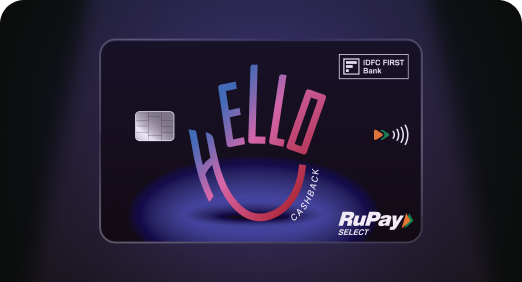
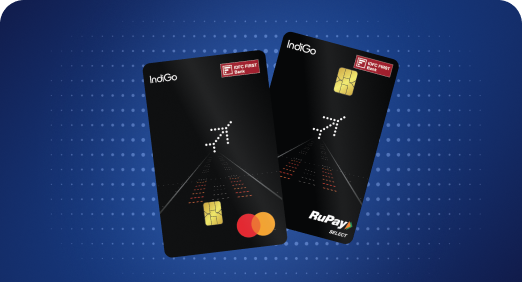

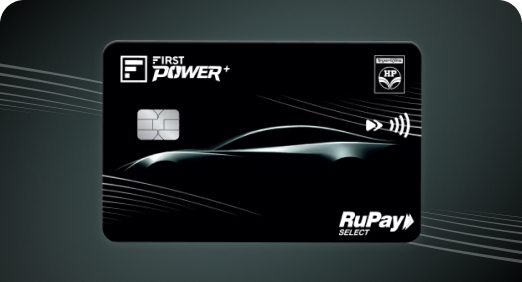
A Card that Powers your Savings & Lifestyle
IDFC FIRST Bank HPCL Credit Card









Most Searched
Earn up to 7% interest on your Savings Account
Open Account Now
Download our app
Get instant help for all your queries in one place
Unlock features, exclusively available
only on the IDFC FIRST Bank app
Trusted by 1.2+ million Indians.


4.8

4.8

Tools & Calculators
Privilege Program



Tools & Calculators

Unlock features, exclusively available
only on the IDFC FIRST Bank app
Savings Account
 After a mutual fund redemption, do not leave your funds idle. Park them in a savings account that earns competitive savings interest while keeping your money fully liquid for future money investment decisions.
Maintaining liquidity allows you to stagger your re-entry into markets, reduce timing risk, and align your investment planning with better opportunities.
An IDFC FIRST Bank Savings Account offers a practical solution after a mutual fund redemption, combining high interest, a zero lock-in period, and seamless digital control to help you manage and redeploy funds efficiently.
After a mutual fund redemption, do not leave your funds idle. Park them in a savings account that earns competitive savings interest while keeping your money fully liquid for future money investment decisions.
Maintaining liquidity allows you to stagger your re-entry into markets, reduce timing risk, and align your investment planning with better opportunities.
An IDFC FIRST Bank Savings Account offers a practical solution after a mutual fund redemption, combining high interest, a zero lock-in period, and seamless digital control to help you manage and redeploy funds efficiently.
You’ve just completed a mutual fund redemption, and a sizeable amount has been credited to your account. Now, what should you do with it?
At this stage, most investors are not looking for high-risk returns. Instead, the focus shifts to keeping the money safe and accessible while still earning something meaningful. Making the wrong move here could mean either losing out on potential earnings or locking your funds too soon, both of which can impact your broader investment planning.
So, how do you ensure your money stays productive without compromising flexibility after a mutual fund redemption? Let’s break it down.
The mutual fund redemption brings a few practical concerns:
It’s common to hesitate before committing your funds again. You may want to study market movements, reassess your goals, and identify the optimal time to reinvest in mutual funds. Locking your money in too early in fixed instruments can limit your flexibility if better opportunities emerge.
However, while you take that time to plan, your funds often sit in a regular account, earning minimal returns. After a mutual fund redemption, having your money safe and liquid but not working hard enough for you feels counterproductive.
At the same time, there is often uncertainty around how savings interest is calculated, making it difficult to gauge whether your substantial parked funds are actually generating meaningful returns.
Most savings accounts follow a daily closing balance method to calculate interest. Here’s how it works in practice:
Savings interest is calculated every day based on the closing balance in your account. If your balance fluctuates, say, due to partial reinvestments, your interest earnings adjust accordingly.
While interest accrues daily, it is usually credited to your account monthly or quarterly. This ensures that your earnings are added back and can themselves start earning interest.
When interest is credited, it increases your principal balance. Over time, this creates a compounding effect, where you earn interest on the interest you’ve already earned.
Now, consider the impact of this after a mutual fund redemption. When a large sum is parked even for a few weeks, daily interest calculation ensures that every single day contributes to your returns. Here, with a banking partner that offers competitive rates on higher balances, your investment continues to grow even while it is technically parked.
Liquidity is a key consideration in investment planning after a redemption, when timing and flexibility influence your next move. Here’s why it matters:
Markets move fast. If your goal after a mutual fund redemption is to wait for a better entry point, you cannot afford to have your funds locked.
You may not want to redeem your entire mutual fund at once. You may want to practice staggered investment planning through a Systematic Withdrawal Plan (SWP) or manual tranches. Liquidity enables a phased approach, helping manage market volatility.
When your money is easily accessible, you can make well-timed choices instead of rushing into the next money investment.
If you are looking for a dependable place to hold your mutual fund redemption proceeds, the IDFC FIRST Bank Savings Account offers a practical and efficient solution. It is designed for investors like you who want their funds to remain accessible, productive, and ready for the next move.
Here is why it fits into your post-mutual fund redemption strategy:
With a competitive savings interest rate of up to SA interest rate - 7% p.a., your balance continues to grow while you evaluate your next money investment. This way, your funds remain productive even during short waiting periods.
Flexibility is essential when deciding on your next step after a mutual fund redemption. With no lock-in restrictions, you can access your funds at any time. It allows you to act quickly for reinvestment.
Managing a large balance requires visibility and control. With seamless digital tracking, you can monitor your funds, review your interest, and align decisions with your broader investment planning, all in real time. You can stay informed and confident throughout the transition phase.
If your reinvestment plans are delayed after a mutual fund redemption, you can easily convert your savings into an FD. This gives you the flexibility to lock in higher returns when your horizon becomes clearer, without shifting funds elsewhere.
Post redemption, managing your funds efficiently is just as important as earning returns. The Mobile Banking App enables you to:
This level of accessibility ensures that you are always ready to act when the right time for reinvestment arrives.
A successful mutual fund redemption is a milestone, but it shouldn't be the end of your money's growth story. Your capital has worked hard for you in the markets; now, it is time for your bank account to do the same. By choosing a partner like IDFC FIRST Bank, you ensure that your proceeds stay liquid, earn a premium rate of savings interest, and remain ready for your next big move in investment planning.
Open an IDFC FIRST Bank Savings Account today and make your liquidity work for you.
Yes, the interest earned on savings is taxable under your income tax slab under the head ‘Income from Other Sources.’ However, with the old regime, you get deductions of up to ₹10,000 on savings account interest thanks to Section 80TTA (the limit is ₹50,000 for senior citizens under Section 80TTB).
The mutual fund redemption time usually depends on the type of fund. Liquid or Overnight funds may be credited within 1 working day (T+1), while Equity and Debt funds typically take 2 to 3 working days (T+2 or T+3). Always factor in this gap when planning immediate payments.
After a mutual fund redemption, evaluate your financial goals, risk appetite, market conditions, and liquidity needs. Your decision should align with your broader investment planning strategy rather than short-term market movements.
The contents of this article/infographic/picture/video are meant solely for information purposes. The contents are generic in nature and for informational purposes only. It is not a substitute for specific advice in your own circumstances. The information is subject to updation, completion, revision, verification and amendment and the same may change materially. The information is not intended for distribution or use by any person in any jurisdiction where such distribution or use would be contrary to law or regulation or would subject IDFC FIRST Bank or its affiliates to any licensing or registration requirements. IDFC FIRST Bank shall not be responsible for any direct/indirect loss or liability incurred by the reader for taking any financial decisions based on the contents and information mentioned. Please consult your financial advisor before making any financial decision.
The features, benefits and offers mentioned in the article are applicable as on the day of publication of this blog and is subject to change without notice. The contents herein are also subject to other product specific terms and conditions and any third party terms and conditions, as applicable. Please refer our website www.idfcfirst.bank.in for latest updates.


You will earn