









Login to Internet banking
A brand-new experience - smarter, faster, and secured






You gain a dedicated partner committed to helping you reach your full potential and achieve new heights
Know More

BRAVO (Auto Sweep)
Convert the idle funds in your current account into a fixed deposit with the BRAVO feature.
Know More
Zero Forex Markup Current Account
Maximise your savings and boost profitability with our Zero Forex Markup current accounts
Know More







Enjoy Zero Forex on all IDFC FIRST Bank Credit Cards
Save more on all international spends
Know More
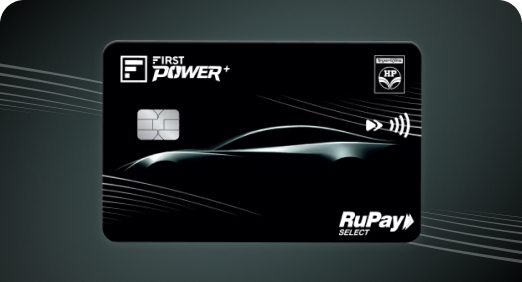
A Card that Powers your Savings & Lifestyle
IDFC FIRST Bank HPCL Credit Card









Most Searched
Earn up to 7% interest on your Savings Account
Open Account Now
Download our app
Get instant help for all your queries in one place
Unlock features, exclusively available
only on the IDFC FIRST Bank app
Trusted by 1.2+ million Indians.


4.8

4.8

Tools & Calculators
Privilege Program



Tools & Calculators

Unlock features, exclusively available
only on the IDFC FIRST Bank app
 Explains how salary, employment type, existing debt, DTI ratio, LTV ratio, car age, and valuation influence loan affordability.
Shows how lenders assess credit score, income stability, and borrower risk when setting loan terms and interest rates.
Introduces a practical 15% EMI affordability rule, with an example based on a ₹50,000 monthly salary and a ₹3 lakh loan.
Recommends using an EMI calculator, strengthening the credit profile, and selecting suitable terms to keep repayments manageable.
Explains how salary, employment type, existing debt, DTI ratio, LTV ratio, car age, and valuation influence loan affordability.
Shows how lenders assess credit score, income stability, and borrower risk when setting loan terms and interest rates.
Introduces a practical 15% EMI affordability rule, with an example based on a ₹50,000 monthly salary and a ₹3 lakh loan.
Recommends using an EMI calculator, strengthening the credit profile, and selecting suitable terms to keep repayments manageable.
Purchasing a vehicle is a major milestone for most people in India, but the high price tags of brand-new models often lead savvy buyers toward the pre-owned market. While the initial cost of a used car is lower, the financing landscape is different. If you are planning to take the EMI route, the biggest question isn't just "Which car?", but "How much salary is actually enough?"
Navigating the world of used car financing in India requires a blend of financial discipline and market knowledge. Unlike new car loans, which often come with standardised terms, used car financing is highly personalised. Your readiness depends on how much of your monthly take-home pay can safely go toward an Equated Monthly Installment (EMI) without compromising your lifestyle or long-term savings.
When you apply for financing, the lender doesn’t just look at the car; they also assess the risk profile of the entire transaction. Several variables dictate the used car loan interest rate you will ultimately be offered.
Employment type: Salaried individuals often get more competitive rates compared to self-employed individuals due to perceived income stability.
Loan-to-value (LTV) ratio: If you make a higher down payment, you reduce the lender’s risk. Some banks provide funding up to 100% of the car's valuation, though this varies based on the applicant’s profile.
Existing debt: Lenders look at your current financial obligations. If you are already paying off a home loan or personal loan, the rate offered on a car loan might be higher to offset the risk.
Debt-to-income (DTI) ratio: This ratio shows how much of your total monthly income goes towards paying debts. Lenders generally prefer a DTI below 50% to ensure you have enough liquidity.
The age of the vehicle is perhaps the most critical physical factor. Lenders view a car as collateral; as the car ages, its value depreciates, making it a riskier asset for the institution to hold.
Valuation standards: Banks usually send an authorised evaluator to determine the market value of the car. The loan amount is based on this valuation, not necessarily the price you negotiated with the seller.
Interest premium: Generally, used car interest rates are higher than new car rates because the resale market for an older vehicle is less predictable.
Tenure limits: Most lenders finance cars only up to a certain age (of the vehicle), but IDFC FIRST Bank offers flexible tenures ranging from 12 to 84 months, allowing you to tailor the repayment to your budget depending on the age of the car.
Model popularity: High-resale value brands like Maruti Suzuki, Hyundai, or Toyota often attract better terms because the bank knows the asset can be liquidated easily if needed.
Your CIBIL score is your financial resume. It shows how disciplined you have been with your past credit cards and loans.
The 750+ rule: A credit score above 750 is generally considered excellent. It gives you the leverage to negotiate a lower pre-owned car loan interest rate.
Income benchmarks: While minimum requirements vary, some banks require a minimum annual income of ₹1.8 lakhs for salaried individuals and ₹1.5 lakhs for self-employed professionals to ensure repayment capacity.
Stability matters: At least 1 year of total work experience is looked at for salaried employees and 2 years of business continuity for the self-employed to prove income consistency.
Lenders use a risk-based pricing model. This means two people buying the same car might get different interest rates based on their personal financial profiles and history.
Residence stability: Whether you live in an owned or rented house can impact the assessment. Those living in owned homes are often viewed as more stable.
Digital verification: Modern lenders use paperless processes to speed up approvals. IDFC FIRST Bank uses a digitised process to assess your profile quickly, often providing instant loan approvals of up to ₹15 lakhs.
Surrogate programs: For those without formal income proof (like ITR), some banks offer programs based on bank statement behavior, previous loan track records, or even your existing car ownership.
Credit utilisation: If you are constantly hitting your credit card limits, it signals potential financial distress, which could lead to higher used car loan rates or even a rejected application.
The Rate to EMI journey is where the math meets the road. To calculate if your salary is enough, you should follow the 15% rule: your car EMI should not be more than 15% of your monthly take-home salary. This ensures you have enough funds left for fuel, insurance, maintenance, and your daily living expenses.
Example: If you earn ₹50,000 per month. Following the 15% rule, your EMI should be around ₹7,500. At an interest rate of 12%, a ₹3 lakh loan for 5 years results in an EMI of approximately ₹6,673. In this scenario, a monthly salary of ₹50,000 is sufficient. However, if you want a luxury pre-owned vehicle, you will need a much higher salary or a larger down payment to keep the EMI within that 15% bracket.
When choosing a partner for this journey, it helps to look for lenders with customer-centric features. For instance, IDFC FIRST Bank provides competitive terms that can make high-value cars more accessible.
Determining if your salary is enough to buy a used car on EMI in India requires looking beyond just the monthly payment. You must account for the prevailing interest rates, the age of the vehicle, and your own credit health. By choosing a lender that offers transparency and flexible terms, such as IDFC FIRST Bank, you can simplify the journey from the showroom to your driveway. Always use an online EMI calculator before signing the dotted line to ensure your new ride stays comfortably within your financial reach.
Used car rates are higher because they have lower resale value and higher maintenance risks; if you default, the bank might not recover the full loan amount by selling a depreciated asset.
Yes, a high CIBIL score indicates you are a reliable borrower, allowing lenders to offer you lower interest rates.
Older cars have higher interest rates because they have lower resale value and a shorter remaining functional life.
Yes, if you have a high credit score or a strong income profile, you can negotiate better rates or lower fees.
The contents of this article/infographic/picture/video are meant solely for information purposes. The contents are generic in nature and for informational purposes only. It is not a substitute for specific advice in your own circumstances. The information is subject to updation, completion, revision, verification and amendment and the same may change materially. The information is not intended for distribution or use by any person in any jurisdiction where such distribution or use would be contrary to law or regulation or would subject IDFC FIRST Bank or its affiliates to any licensing or registration requirements. IDFC FIRST Bank shall not be responsible for any direct/indirect loss or liability incurred by the reader for taking any financial decisions based on the contents and information mentioned. Please consult your financial advisor before making any financial decision.
The features, benefits and offers mentioned in the article are applicable as on the day of publication of this blog and is subject to change without notice. The contents herein are also subject to other product specific terms and conditions and any third party terms and conditions, as applicable. Please refer our website www.idfcfirst.bank.in for latest updates.