








Login to Internet banking
A brand-new experience - smarter, faster, and secured




You gain a dedicated partner committed to helping you reach your full potential and achieve new heights
Know More

BRAVO (Auto Sweep)
Convert the idle funds in your current account into a fixed deposit with the BRAVO feature.
Know More
Zero Forex Markup Current Account
Maximise your savings and boost profitability with our Zero Forex Markup current accounts
Know More


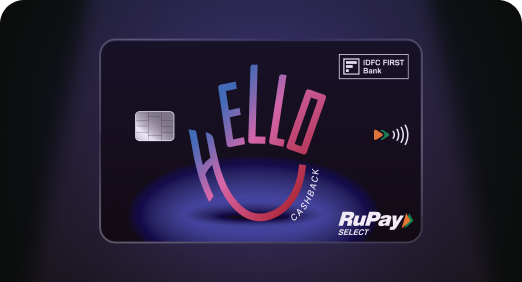
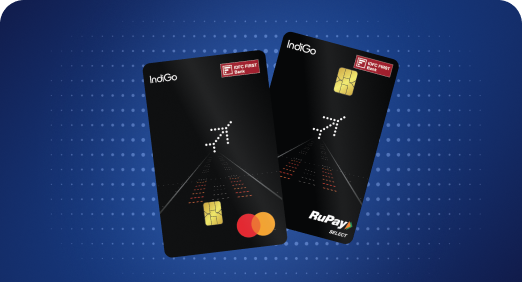
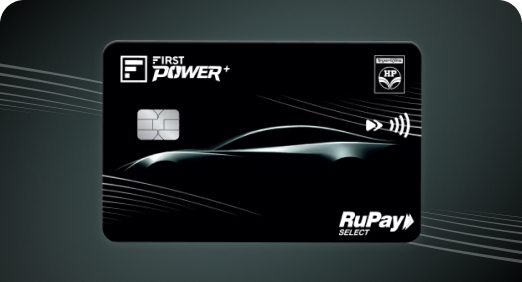
A Card that Powers your Savings & Lifestyle
IDFC FIRST Bank HPCL Credit Card







Most Searched
Earn up to 7% interest on your Savings Account
Open Account Now
Download our app
Get instant help for all your queries in one place
Unlock features, exclusively available
only on the IDFC FIRST Bank app
Trusted by 1.2+ million Indians.


4.8

4.8

Tools & Calculators
Privilege Program



Tools & Calculators

Unlock features, exclusively available
only on the IDFC FIRST Bank app
Credit Card
 A credit card number is typically a 14- to 16-digit sequence used to identify a credit card during transactions.
Different sections of the number can identify the card network, issuing institution and individual card or account.
The final digit is a check digit that can be validated using the Luhn algorithm.
You may be able to find your credit card number through your physical card, banking app, net banking, statement or other authorised channels.
Credit card numbers, CVV, PIN and OTPs are sensitive information and should be protected from unauthorised access or sharing.
A credit card number is typically a 14- to 16-digit sequence used to identify a credit card during transactions.
Different sections of the number can identify the card network, issuing institution and individual card or account.
The final digit is a check digit that can be validated using the Luhn algorithm.
You may be able to find your credit card number through your physical card, banking app, net banking, statement or other authorised channels.
Credit card numbers, CVV, PIN and OTPs are sensitive information and should be protected from unauthorised access or sharing.
Your credit card number is more than a string of digits printed on your card. It helps identify your card during transactions and contains information linked to the card issuer and your account.
Knowing how to locate and verify your credit card number can be useful when making online payments, managing your card through banking services, or accessing your card details when the physical card isn't readily available.
This guide explains how credit card numbers are structured, where you can find them, how they are validated, and the precautions you should take when accessing or sharing your card details.
A credit card number is a unique sequence of digits associated with a credit card. It is used to identify the card when you make purchases, payments or other card-based transactions.
Most credit card numbers contain 14 to 16 digits, although the exact length can vary depending on the card network and issuer.
The number is not simply a random sequence. Different portions of it serve different purposes, including identifying the card network or issuer and the individual card or account.
A credit card number is divided into different sections, with each section serving a specific function.
The first digit is known as the Major Industry Identifier (MII). For payment cards, it identifies the card network the card operates on. For example, cards beginning with 4 are Visa, while those beginning with 5 are Mastercard. RuPay cards typically begin with 6.
The first six digits form the Issuer Identification Number (IIN), also commonly known as the Bank Identification Number (BIN). This includes the Major Industry Identifier as the first digit. Together, these six digits identify the card issuer and the payment network.
The remaining digits identify the individual card or account associated with the cardholder. The number of digits in this section can vary depending on the card's numbering system.
The final digit is known as the check digit. It is used as part of the Luhn algorithm to check whether the card number follows a valid numerical pattern.
Besides the card number, a credit card contains other information that may be required for transactions.
The card number identifies the card or account associated with a transaction.
The expiry date indicates the period during which the card remains valid. It may be required when making certain online transactions.
The Card Verification Value (CVV) is a security code generally found on the back of a physical card. It may be required to verify certain online transactions.
The Luhn algorithm is a mathematical formula commonly used to validate card numbers. It checks the digits against a specific calculation and can help detect common errors, such as an incorrectly entered digit.
However, passing a Luhn check does not confirm that a credit card is active, genuine or authorised for transactions. It only indicates that the number passes the mathematical validation.
You can usually find your credit card number on the physical card. If you don't have the card with you, you may also be able to access available card information through authorised banking channels.
Depending on the card design, the credit card number may appear on the front or back of the card. Some newer cards may not display the complete number for security reasons.
Your bank's official mobile banking app or net banking platform may allow you to view or manage your credit card details. The information displayed may be masked for security.
Your credit card statement may include your card or account information. However, statements may show only a masked portion of the card number.
If you have added your credit card to an authorised digital wallet, you may be able to access limited card information. Digital wallets typically use tokenised or masked card details rather than displaying the complete card number.
Your credit card number and other card details should be treated as sensitive financial information.
Access your card information only through your bank's official website, mobile app or other authorised channels.
Never share your CVV, PIN or OTP with anyone, even if they claim to represent your bank.
Only save your card details on trusted websites and applications. Avoid entering card information through suspicious links or unverified platforms.
If you notice an unfamiliar transaction or believe your card details may have been compromised, contact your card issuer through its official channels immediately.
If you have an IDFC FIRST Bank credit card, you can manage your card through the bank's authorised digital banking channels.
You may be able to access available card details through the IDFC FIRST Bank mobile app or net banking. You can also check your credit card statement or contact IDFC FIRST Bank customer service if you need assistance.
For security reasons, always use official IDFC FIRST Bank channels when accessing or verifying your credit card information.
A credit card number commonly contains 14 to 16 digits, although the exact length depends on the card network and issuer.
The first digit is the Major Industry Identifier (MII), while the following digits form part of the Issuer Identification Number (IIN), also known as the Bank Identification Number (BIN).
BIN or IIN refers to the initial portion of a card number used to identify the card issuer and payment network.
The Luhn algorithm is a mathematical method used to check whether a card number follows a valid numerical pattern. It can detect certain input errors but does not confirm that a card is active or usable.
You may be able to access available card information through your bank's mobile app, net banking, statements or other authorised services. The complete card number may not always be displayed for security reasons.
No. A credit card number identifies a credit card, while a bank account number identifies a banking account. They serve different purposes.
You should share your credit card details only when necessary and through trusted payment channels. Never share sensitive authentication details such as your CVV, PIN or OTP.
Contact your card issuer through its official channels and block or temporarily disable the card as soon as possible. You can then follow the issuer's process for replacing the card.
The features, benefits and offers mentioned in the article are applicable as on the day of publication of this blog and is subject to change without notice. The contents herein are also subject to other product specific terms and conditions and any third party terms and conditions, as applicable. Please refer our website www.idfcfirst.bank.in for latest updates.