








Login to Internet banking
A brand-new experience - smarter, faster, and secured

You gain a dedicated partner committed to helping you reach your full potential and achieve new heights
Know More
BRAVO (Auto Sweep)
Convert the idle funds in your current account into a fixed deposit with the BRAVO feature.
Know More
Zero Forex Markup Current Account
Maximise your savings and boost profitability with our Zero Forex Markup current accounts
Know More


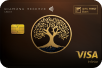


A Card that Powers your Savings & Lifestyle
IDFC FIRST Bank HPCL Credit Card








Most Searched
Earn up to 7% interest on your Savings Account
Open Account Now
Download our app
Get instant help for all your queries in one place
Unlock features, exclusively available
only on the IDFC FIRST Bank app
Trusted by 1.2+ million Indians.
4.8

4.8

Tools & Calculators
Privilege Program



Tools & Calculators

Unlock features, exclusively available
only on the IDFC FIRST Bank app
Savings Account
 After an investment exit, choosing among the different types of bank accounts is critical to safely receive a large amount while keeping it accessible and earning interest until you decide on your next move.
Not all types of bank accounts serve this purpose well. Current accounts earn no interest, and fixed deposits reduce flexibility. A savings or sweep-in option is often more suitable for short-term parking.
The IDFC FIRST Bank Savings Account is a strong choice because it lets you securely receive large sums, earn competitive interest up to 7% p.a., and easily move or invest your money when required.
After an investment exit, choosing among the different types of bank accounts is critical to safely receive a large amount while keeping it accessible and earning interest until you decide on your next move.
Not all types of bank accounts serve this purpose well. Current accounts earn no interest, and fixed deposits reduce flexibility. A savings or sweep-in option is often more suitable for short-term parking.
The IDFC FIRST Bank Savings Account is a strong choice because it lets you securely receive large sums, earn competitive interest up to 7% p.a., and easily move or invest your money when required.
The conclusion of an investment cycle, such as a property sale or a mutual fund redemption, marks a transition in which your objective shifts from capital appreciation to capital preservation.
However, the period between exiting one asset and entering the next is a critical window. You want your money to stay safe, be accessible for your next move, and certainly not sit idle while inflation eats away at its value.
To answer that, you first need to understand the different types of bank accounts available, and which one can be a true ally for your newly liquid capital.
When you receive a large influx of capital, the destination to store money becomes a strategic choice. The reason you must distinguish between the different types of bank accounts is that each one carries different rules regarding accessibility and returns.
Here is how the types of bank accounts function as tools for your specific exit scenario:
It is often the primary choice among the various types of bank accounts for receiving exit proceeds. It offers the highest degree of liquidity, allowing you to move funds the moment a new investment opportunity arises.
If you have a clear timeline, an FD can provide a guaranteed, higher rate of return than a savings account. For example, if you know you won’t need the capital for exactly six months, an FD can be a useful investment. However, breaking an FD prematurely to reinvest urgently can result in a penalty and a reduction in the promised interest rate.
Often the default for business owners or startup founders, this account is designed for high-volume transactions rather than wealth preservation. While it can handle massive inward remittances, it offers zero interest. It is best used only as a very temporary transit point.
The auto sweep facility is available in select bank accounts. It essentially bridges the gap between a savings account and an FD. Any amount above a certain threshold is automatically moved into a higher-interest-earning deposit but remains instantly breakable if you issue a cheque or a transfer. It provides the safety of an FD with the fluid accessibility of a savings account.
Understanding these different types of bank accounts gives you a foundation for making decisions based on your priorities.
When you are dealing with a large sum of money, even small differences in interest or accessibility can have a noticeable impact.
If you park your funds in a current account, you may earn nothing. This is one of the most common mistakes investors make after a liquidity event. Leaving money idle in a low-interest savings account also reduces your earning potential. Over time, this can translate into substantial missed gains.
On the other hand, locking everything into an FD immediately may limit your flexibility. You may need funds for reinvestment, tax payments, or other opportunities. Among the different types of bank accounts, FDs work best when you have clarity on timelines.
When you are evaluating how many types of bank accounts you need to manage your exit, you must weigh three pillars:
Determine how quickly you need to move the capital. If you are scouting for a new property or startup investment, your funds must remain in accounts that allow for immediate, high-value transfers without the lock-in periods or premature withdrawal penalties.
A large windfall represents years of discipline. You need a banking partner with robust regulatory compliance and a strong capital adequacy ratio to ensure your money remains secure.
While safety is first, yield is a close second. The goal is to find different types of bank accounts that offer higher interest rates. This ensures the interest can offset the cost of holding cash.
When you hold a substantial amount of capital, you need a financial partner that understands the scale of your liquidity. Among the different types of bank accounts available, the IDFC FIRST Bank Savings Account is specifically engineered to act as a high-performance bridge between your recent exit and your next venture. It offers:
Earn up to 7% p.a. interest, calculated daily and credited monthly. This allows your funds to grow while remaining accessible.
You can open and manage your account entirely online with a user-friendly app. Track large credit, transfer funds instantly via IMPS, NEFT, or RTGS, and monitor balances in real time.
Instead of locking funds immediately, you can hold your money in savings and convert it into fixed deposits when you are ready. This flexibility helps you respond to market opportunities while still earning in the interim.
When a large amount is credited to your account, visibility and control become critical. The Mobile Banking App helps you:
With over 250+ services, the app brings everything, from tracking and transfers to deposits and investments, into a single interface. It gives you complete visibility and control over your funds at all times.
A clear understanding of the different types of bank accounts can help you make informed choices and avoid unnecessary losses. With the right balance of safety, liquidity, and returns, an IDFC FIRST Bank Savings Account provides a reliable way to manage the proceeds from a large investment exit.
Open Savings Account today and take control of how your funds are managed from day one.
Yes, there is no legal limit on the maximum balance you can maintain in different types of bank accounts. However, for very large sums, it is wise to ensure the bank has a strong capital adequacy ratio and a reputation for stability. That said, keeping a substantial amount in a savings account for too long may mean you miss out on higher returns available through other options, such as fixed deposits or market-linked instruments.
Interest from savings accounts and FDs is taxable at your slab rate. However, savings accounts offer a deduction of up to ₹10,000 under Section 80TTA (for individuals below 60), which is not available for FD interest.
When comparing different types of bank accounts, a monthly credit account is superior because of compounding. Since the interest is added to your principal every month, the subsequent month’s interest is calculated on a slightly higher base. It increases your effective annual yield.
Yes, spreading your funds across multiple bank accounts can reduce risk and improve flexibility. It helps you stay within deposit insurance limits, manage liquidity more effectively, and take advantage of different interest rates and features, such as sweep-in facilities, across banks.
To maintain quick access, keep a portion of your funds in a high-interest savings account with instant transfer capabilities, such as IMPS or RTGS. Avoid locking all funds into fixed deposits, and consider sweep-in facilities that let you withdraw funds instantly without penalties.
The contents of this article/infographic/picture/video are meant solely for information purposes. The contents are generic in nature and for informational purposes only. It is not a substitute for specific advice in your own circumstances. The information is subject to updation, completion, revision, verification and amendment and the same may change materially. The information is not intended for distribution or use by any person in any jurisdiction where such distribution or use would be contrary to law or regulation or would subject IDFC FIRST Bank or its affiliates to any licensing or registration requirements. IDFC FIRST Bank shall not be responsible for any direct/indirect loss or liability incurred by the reader for taking any financial decisions based on the contents and information mentioned. Please consult your financial advisor before making any financial decision.
The features, benefits and offers mentioned in the article are applicable as on the day of publication of this blog and is subject to change without notice. The contents herein are also subject to other product specific terms and conditions and any third party terms and conditions, as applicable. Please refer our website www.idfcfirst.bank.in for latest updates.


You will earn